What a great day to be a Social Studies teacher! I had two SS10 classes in the library today taking a 2nd, deeper look at what they could find online to support their ongoing heritage projects. Some sat at tables sharing what they had brought in, others were plugged in surfing for maps, photos, and family trees. Holy cow, they were finding amazing connections and very eager to talk about it. I'll share the stories of four girls to illustrate. The boys were too quiet today, I guess.
Courtney produced a box of family history material that contained albums, journals, genealogies, reunion scrapbooks, and loose photos. She said it would be overwhelming to go through it all to figure out what kind of story she was going to tell to make sense of it... but she had a huge grin and obviously relished the task. She had done some of this kind of work in SS9 and figured out her French Canadian roots went back to the banks of the St. Lawrence and the Company of 100 Associates in the 1660s. This year she is taking on the German side of her family.
Bethany produced a family chart and family history book and began writing out a clean copy of her family tree. I looked at some of the names and dates and one set caught my eye. She had Irish great-x?-grandparents who came off the boat in the 1840s and made their way to "Concession 10, Lot 19" in South Plantagenet, Prescott township of Upper Canada. The family history book told some of their story, clearing land and building a cabin, the birth of children and hardships endured, and included a map of the land grants. I found the place on Google Earth (see the picture above, the land on either side of South Nation River, a tributary to the Ottawa) and it still retains some of the features that must have been original improvements in the early 19th century. There is also some extraction of ? going on, complete with drainage ponds - a chance to ask questions about what's going on now. What made it extra neat is that the immigration story, land grant, map, story, and location were pretty much an exact match for the "New Home" simulation we did in class a few weeks ago. She laughed when she realized how her fictitious story about the role-play was so similar to what her ancestors went through; she got that "genealogist's chill" when one connects something real and fascinating to one's identity and personal/historical timeline.
Melanie had some books and an enormous family tree/chart that included a picture curious little run-down house. It seems one of her relatives lived there for a time. According to the caption, the shingles concealed a log cabin underneath that was part of the original 1876 Hudson Bay Company post in Calgary, and as such is the oldest building in the city. We found it on Google Street view and were able to piece together that its identity was recently (re)discovered and there are restoration plans underway. Needless to say, she is dialed in now, to the course and to her past, and wants to know more about who put together the information and how the house is connected to her history.
Kaitlin has been gathering copies of records and photos from relatives over the last few weeks. She has looking at towns in Luxembourg, French, Irish family photos, lots of maps, and an interesting pile of records, and a collection of WWII-era documents, including a Kennkarte although we're not sure how this is connected to her family. One of the issues students encounter when doing online research is the volume of material that comes up when they search their roots -- sometimes it is connected, sometimes it is not. She also told me she was "wearing her heritage" -- her black leather shoes and white, wide-collared shirt were her great-grandfather's, both a size too big but a great look for 2011 anyways. A neat start to her research.
Four stories, four kids engaged in project-based learning, four beginnings to what will be awesome presentations in a few weeks. These "identity narratives" start with student-generated content and speak to the heart of the big themes and skills in SS9, SS10, SS11, History 12 curriculum, and cool connections to events that had significance to Canada and the World. These kids will walk into every subsequent class, family conversation, and learning situation armed with social context, historical perspective, and a view of the world that extends ever further from their selves... what an absolutely amazing day to be a Social Studies teacher!
musings about education & technology, ecology & identity, social change & critical inquiry... a place for ideas, reverie, agitation, and contemplation
Friday, November 04, 2011
Wednesday, November 02, 2011
Cross Hairs
I was reading a post on a former colleague's blog and my comment for him turned into a bit of a diatribe... perfect for a post here!!! So... here it is...

Your positive attitude is appreciated, but there has to be room, especially among principals and leaders like yourself, for skepticism, critique, and deconstruction of the gov't vision for the BC Ed system. If we don't put plans (of any kind) in the crosshairs, it is too easy to build self-justifying narratives that make the plan's assumptions seem indisputable. Depending on the agenda, constructing these narratives can also make the "plan" look inevitable, like it is part of the flow of history, or original, like it has never been tried before. An example is the rhetoric around 21st century learning. As you've posted before, it can be about the 7Cs etc., but it can also be about privatizing education, replacing teachers with commercial services, downloading the costs of public education to the users (esp. re technology). It is used to describe project-based learning, embrace AFL, PLC, DL, PL, develop group skills and habits of mind, accept vertical corporate integration in delivery models and student data systems, even new school building construction, school closures (brick and mortar is old school, apparently), hiring practices, both liberating and restrictive tech policies, etc. Too broad to be a movement, or even a school of thought. We live in the 21C, so duh. Let's go 22C or 26C if we want progress. At some point in there we get to fight aliens for sure. Anyways, the first task for educators going from either harsh critic or loyal supporter to a habitual critical inquiry is to step away from the jargon. I've followed your posts and contributions to educational discourse for a while and I think you are gradually getting the buzzwords out of your parlance... keep it up! It is so neat to see how your staff and school reflect the value you place on teamwork and creative thinking. While I don't always agree, your ideas and approach to educational theory are very positive and will have the most impact when you can stand apart, just a bit, from the "managed message" that is so apparent in the BCED plan. The hard work is facing the task of putting all of it in the crosshairs and allowing the authentic parts to make sense in your context... a slow reveal, usually, but worth the patience. I've noticed other BC principals and superintendents starting blogs, etc. and most are hopelessly locked into the jargon and don't appear to be coming from "selfs" the way yours is. Most of them don't allow comments for fear of the inevitable critique from jerks like me. Most repeat the ubiquitous videos and quotes on "21C"ish topics. But, they've got it started. The majority are still not ready for a web presence, and will find it hard to lead teachers into any kind of "21C" until they realize we are actually wanting them to set their ideas out in a place we can examine them. Our district (57) seems to have slipped 10 years back in terms of the teacher-district partnerships that used to support technology (you'd be shocked to see how the momentum is gone and distrust has taken its place), and I think one thing our leaders can do (on both sides of the admin gap) is to abandon fear and let their "selfs" loose on the old interweb, crosshairs and all. This interactive landscape should not be about career moves and reiteration of cliches, but about horizons of significance (to borrow Taylor's term) and rigorous discourse. I've directed a few of "them" to look at your blog and think about how they may wish to begin a thoughtful web presence. Good luck, keep it real.

Your positive attitude is appreciated, but there has to be room, especially among principals and leaders like yourself, for skepticism, critique, and deconstruction of the gov't vision for the BC Ed system. If we don't put plans (of any kind) in the crosshairs, it is too easy to build self-justifying narratives that make the plan's assumptions seem indisputable. Depending on the agenda, constructing these narratives can also make the "plan" look inevitable, like it is part of the flow of history, or original, like it has never been tried before. An example is the rhetoric around 21st century learning. As you've posted before, it can be about the 7Cs etc., but it can also be about privatizing education, replacing teachers with commercial services, downloading the costs of public education to the users (esp. re technology). It is used to describe project-based learning, embrace AFL, PLC, DL, PL, develop group skills and habits of mind, accept vertical corporate integration in delivery models and student data systems, even new school building construction, school closures (brick and mortar is old school, apparently), hiring practices, both liberating and restrictive tech policies, etc. Too broad to be a movement, or even a school of thought. We live in the 21C, so duh. Let's go 22C or 26C if we want progress. At some point in there we get to fight aliens for sure. Anyways, the first task for educators going from either harsh critic or loyal supporter to a habitual critical inquiry is to step away from the jargon. I've followed your posts and contributions to educational discourse for a while and I think you are gradually getting the buzzwords out of your parlance... keep it up! It is so neat to see how your staff and school reflect the value you place on teamwork and creative thinking. While I don't always agree, your ideas and approach to educational theory are very positive and will have the most impact when you can stand apart, just a bit, from the "managed message" that is so apparent in the BCED plan. The hard work is facing the task of putting all of it in the crosshairs and allowing the authentic parts to make sense in your context... a slow reveal, usually, but worth the patience. I've noticed other BC principals and superintendents starting blogs, etc. and most are hopelessly locked into the jargon and don't appear to be coming from "selfs" the way yours is. Most of them don't allow comments for fear of the inevitable critique from jerks like me. Most repeat the ubiquitous videos and quotes on "21C"ish topics. But, they've got it started. The majority are still not ready for a web presence, and will find it hard to lead teachers into any kind of "21C" until they realize we are actually wanting them to set their ideas out in a place we can examine them. Our district (57) seems to have slipped 10 years back in terms of the teacher-district partnerships that used to support technology (you'd be shocked to see how the momentum is gone and distrust has taken its place), and I think one thing our leaders can do (on both sides of the admin gap) is to abandon fear and let their "selfs" loose on the old interweb, crosshairs and all. This interactive landscape should not be about career moves and reiteration of cliches, but about horizons of significance (to borrow Taylor's term) and rigorous discourse. I've directed a few of "them" to look at your blog and think about how they may wish to begin a thoughtful web presence. Good luck, keep it real.
Labels:
21st century learning,
connections,
inquiry
Friday, October 28, 2011
Heritage redux
Another year, another two groups of SS10 students embarking on heritage projects. This is so cool, and I'l trying to stay "present" for them as they have a hundred questions, and many want to share stories at once. It's becoming a tradition at our school, and the evidence that doing heritage research (necessarily a combined reflection on identity and culture) is popping up in many courses. Brandon told his english teacher the other day that he is connected to key figure in the Salem Witch Trials (which they were reading about) and showed the family charts, something he started in SS10. Students in Ian's SS11 class are frequently jumping in with "my great-grandfather fought in that battle" or "we've got photos from the Depression, I'll bring them in. Two kids realized, in doing their heritage projects, that their ancestors shared a Northwest Company canoe during the fur trade (pre-1820) -- one a hivernant and the other a voyageur. These new students are learning that their heritage is within reach. In class yesterday I asked what they'd save from their house in an emergency (xbox etc. covered by insurance, family and pets are safe blah blah). Jacob mentioned ggfather's war medals, Bruce mentioned grandfathers trunk (with which he fled E, Berlin before the wall went up), Alyssa mentioned family photo albums. We're in the library lab right now, and when I look around at the screens I'm seeing a Kennedy tartan, a marriage register from Halifax in 1912, a map of some village in South Africa, also lots of dead end web searches, a few kids on the #Occupy trail, one guy playing some game that messes with google searches, many kids trying to figure ot how to spell their grandmother's maiden name. Anyways, I'm excited to see how this year's projects develop.
Thursday, October 20, 2011
PRO-D !!
Off tomorrow for some great professional development with the Pacific Slope Consortium. This is our 2nd annual Purden retreat, and our model caught the attention of the Ministry of Education last year. Some combination of the minister, deputy minister, and ministerial secretary thought this was exactly what was needed in our province and asked how they could support us. Ian has this dialed in, he's been hobnobbing with the higher-ups. We're looking into a camp-and-confer later this year or next year near 100 Mile? Our model is pretty basic -- bring together sharp minds, rich topics related to teaching, learning, citizenship, sustainability & identity, and a setting that inspires revery, discourse & self-reliance. This fits into the larger vision of the PSC that sees small-scale self-sufficient cells of innovative educators practicing as if the ideal learning environment already exists, combined with a willingness to take its pedagogical cues from history as much as the future-focus that drives most of the current educational discourse in British Columbia. Anyways, our topics for tomorrow's session include: role-play simulations in SS10 and SS11, what we're learning from our use of twitter, considering the possibilities for a Vimy Ridge trip in 2017, a 10-year futureshock exercise, and collaboration for call-for-papers (ed journals) & conference presentations. I must remember to update my professional growth plan with the details. Although I love my job and I have great classes, the climate for professional growth is often polluted by politics and agendas. That's one of the reasons I started maintaining a growth plan -- I would rather anticipate and respond creatively to what will no doubt be perceived as a burden by teachers in years to come... do something well now (at least to me) so that nobody can ask me to do something crappy in 2 years... I should make that my motto. So, it is with some real joy and enthusiasm that I look forward to the critical inquiry and exploration of social capital that the PSC brings to the campfire.
Labels:
education,
identity,
professional development
Friday, October 14, 2011
We Day
What an amazing day yesterday... I was in Vancouver with students from 5 PG schools for the "We Day" event at Rogers Arena with 18,000 others. We heard speeches from Mia Farrow, the Kielburger brothers, Holly Branson (her dad Richard also made a surprise visit) and many more. Entertainment from Shaquille O'Neal, Down with Webster, Hedley, and others. The speakers and hosts repeated many similar themes and catch-phrases (and lots of ads), but the message was focused on human rights and social change. It was as much a celebration for work already being done by student leaders around the province as it was about inspiring kids to action. The highlight or me was the keynote from Mikhail Gorbachev! He spoke about the need for this generation to pick up the peacemaking torch. Kind of amazing to hear someone start a sentence with "When we were ending the Cold War..." I tried to give the students a crash course on the Soviet Union and the Cold War... most had taken Social Studies 11 and had the context if not the person figure out. We had a great group... curious, compassionate kids; very respectful but also energetic about making a difference in their world. Great conversations and storytelling with the other chaperones, too, about activism, honesty in education, and history.
Wednesday, October 05, 2011
Steve Jobs
Took a screenshot just now... the news today that Steve Jobs has passed away is hitting me like a brick. I'm not surprised, I guess, but sad nonetheless. Apple computers, software, and stuff have accompanied my entire teaching practice, and Jobs has influenced my approach to teaching and use of media, and wedged his way into my family in some ways. Elegance, function, aesthetics, and intuitiveness are very important to me... I'm a Mac.
I suppose he is famous because of his business success and ability to read trends -- he was really good at making and selling things that people wanted to buy (even if we didn't know we needed it!) -- but more than that he had a way of pursuing high design and performance standards, often when those around him were not, or didn't understand what he was doing. That's the part I've tried to emulate.
Labels:
steve jobs,
technology
Waffle Tectonics
What a great way to wrap up our unit on earth structure, geology, plate tectonics, faults/folds, earthquakes, and volcanoes. Nick and Nick served up waffles for the class, using each one to demonstrate some kind of plate boundary or fault type before their classmates devoured them. We didn't learn anything new about tectonics, really, didn't need to as this was explored in depth elsewhere, but we did congratulate ourselves for hard work with some great waffles -- crisp golden outside, fluffy and light inside... I skipped the syrup and choc chips with no regrets. It couldn't have tasted better if the gauffre iron were crushed on thorns of fire (I think of this reference to Pattern Language every time I have waffles).
After all of the lessons, slideshows, reading, videos, quizzes, and demos in our unit, we've had some fantastic presentations that fulfilled three criteria: deepen our understanding of selected learning outcomes from the unit, reflect the interest & talents of the student as applied to meaningful inquiry, and embody learning in some way -- voice, performance, demonstration, physical construction, etc. Today was a small feast, a celebration of the interesting things we've done over the last 3 weeks, but is was also a celebration of how GOOD students are... I hear a lot of complaints about how students are tuned out and need a contstant barrage of technology to be entertained. This was a nice, slow, quiet... and tasty.
Labels:
embodiment,
food,
geography
Thursday, September 29, 2011
A New Home

Social Studies 10, early Canadian history... yesterday and today we used a simulation/role-play to explore what life in Upper Canada might have been like in the early 1800s. Most of this activity I borrowed from other teachers (like Rob) and an old print resource -- on paper it looks corny and old school, but for some reason the students buy in immediately and will keep it up for hours. After figuring out who was rich and who was poor, they were scheming how to raise funds for building a school, how to set up a shipping system for exporting goods, wealthy folks offering land in exchange for monopolizing skills of the poor (e.g. exclusive rights to the cobbler's services), lots of marrying and deals. One of the students whose role card said "judge" has built a courthouse and is now granting land on behalf of the colony in exchange for promising contracts to improve life for the colonists. Of course, he ended up with controlling interest in two sawmills and share of the profits from a railway project. Others were arguing over horses and what a broadaxe could do, defining "clergy reserve" and "grist mill." Churches were built ("hey what's a presbyterian?"), docks and bridges were stretched across the river, and roads cleared. Gender and race came up, as did wealth, distribution service to community, and representation. Somewhat surprisingly, environmental issues did not come up much -- almost all were content use every scrap of resource, to log off their land grants and mill the wood ASAP. I was really quite something to see two classes of teens being very excited to imagine and act out a different time and place for two hours -- no props, not prep, no fixed rules. This is a nice little shared learning experience that helps gel a class and anticipate the big questions and learning outcomes of the course. It gives them a phenomenological foundation and embodied empathy for the challenges of pioneer culture, setting the stage for their own heritage inquiry further into the course. Many asked if they could "keep the game going" tomorrow -- one girl thought we had switched into these roles for the whole course and would make our way through the curriculum in the first person. What an intriguing idea! I asked if she thought she could handle being in character for 4 months and she said "why not, its a great way to learn." Needless to say I'm thinking of the next opportunity to (re)introduce a role-play.
My plan is to have them synthesize in a narrative what they learned/did in the last two days with what they have been studying from text/teacher/library sources about British North America in the 1820s. I've done this activity and follow-up for a few years, trying to add to the simplicity and joy of the role-play with a little bit of relevant/elegant technology. Now if we had a wireless network or working computers I could get them to video-journal their experience and send it to me as an assignment and self-assessment. Too much to ask, I suppose -- what was accessible, easy, functional, and progressive from 2003-2009 is now out of reach... can someone explain to me how that is moving forward? The mac I had set up for video-journalling has been removed, as have the computers at the back of my class, but have not been replaced. We have a secured wirelesss network that we're not allowed to use, and the public wireless has not yet arrived. Cellphones and email are still blocked (in terms of policy), and virtually every one of the district-level supports for innovative use of technology has been undermined or axed. I suppose the kids with smartphones can work around the deficit of technology, but there are many that will have to wait out the "21st Century Learning" possibilities of this activity until our school gets its act together.
I'm not frustrated, though. This activity was about movement and problem-solving and creative engagement, and most of the students will be happy to write up their stories on paper or a computer and submit them to me and the class. The video option is powerful, though, so I may try to figure out a Plan C for getting the students in front of a webcam to talk about life at their "New Home."
Labels:
embodiment,
heritage,
identity,
role-play,
technology,
wireless
Friday, September 23, 2011
Workers choose own devices
More Offices Let Workers Choose Their Own Devices
http://www.nytimes.com/2011/09/23/technology/workers-own-cellphones-and-ipads-find-a-role-at-the-office.html
Interesting article from the NYT which I came by via a retired colleague... and some food for thought given the big gulf between the management objectives/decisions and teacher expectations/feedback about what technology is for in education. I like the part about the stipend and cooperation between employees and IT/management. This is somewhat different than simply offering public wireless and leaving the rest up to chance, which seems to be one of the planks in our district's tech directions.
I think supporting user choice in our district with some redirected funding would be very interesting and probably yield some surprising benefits. In the least, we should recognize that the different, competing, sometimes disparate needs in our school system require a more responsive approach to backing technology than we've experienced in the last two years. We should think about what it means to support teachers in their use of technology in a different frame than we think about how learners (students, of course, but also teachers and others) access technology for learning and also how offices access technology for business applications. The trend is to download all of the related costs to the user (e.g. http://cultureofyes.ca/2011/09/21/after-personally-owned-devices/, but our school system can't shirk its responsibility to invest its own time, thought, and money into teaching & learning capital -- not all of this can be borrowed from the internet or purchased from a vendor.
The thinking we seem stuck with is bound by district-wide moves and cost downloads (single platform, purchase restrictions, denial of "21C" proposals and learning grants that require purchases, removal of input mechanisms like the DTT, etc.). Perhaps the kind of arrangement described in the NYT article presents a compromise postition and allows innovation to proceed independent of the "choking" tendencies when control/security/standardization/downsizing drive the tech-purchase paradigm.
Interesting article from the NYT which I came by via a retired colleague... and some food for thought given the big gulf between the management objectives/decisions and teacher expectations/feedback about what technology is for in education. I like the part about the stipend and cooperation between employees and IT/management. This is somewhat different than simply offering public wireless and leaving the rest up to chance, which seems to be one of the planks in our district's tech directions.
I think supporting user choice in our district with some redirected funding would be very interesting and probably yield some surprising benefits. In the least, we should recognize that the different, competing, sometimes disparate needs in our school system require a more responsive approach to backing technology than we've experienced in the last two years. We should think about what it means to support teachers in their use of technology in a different frame than we think about how learners (students, of course, but also teachers and others) access technology for learning and also how offices access technology for business applications. The trend is to download all of the related costs to the user (e.g. http://cultureofyes.ca/2011/09/21/after-personally-owned-devices/, but our school system can't shirk its responsibility to invest its own time, thought, and money into teaching & learning capital -- not all of this can be borrowed from the internet or purchased from a vendor.
The thinking we seem stuck with is bound by district-wide moves and cost downloads (single platform, purchase restrictions, denial of "21C" proposals and learning grants that require purchases, removal of input mechanisms like the DTT, etc.). Perhaps the kind of arrangement described in the NYT article presents a compromise postition and allows innovation to proceed independent of the "choking" tendencies when control/security/standardization/downsizing drive the tech-purchase paradigm.
Wednesday, September 14, 2011
Goodbye BCeSIS (sooner or later)
BCeSIS, the problem-plagued student-information system used in our province, appears to be on its way out, at least after a slow death:
TV News Story:
http://www.globaltvbc.com/video/school+software+problems/video.html?v=2132778842&p=2&s=dd#video
Radio News Story:
http://www.cknw.com/Channels/Reg/NewsLocal/Story.aspx?ID=1539426
I'm not sure when it is appropriate to be smug about BCeSIS, but the sustained criticism of the program from design to function to agenda was so immediate, consistent, widespread, and unified that it is quite amazing that our district and province adopted it, devoted huge funds and large chunks of our time to get it going, and supported it as long as it has. I hope the "decision-makers" take something positive away from the BCeSIS experience -- when virtually every one of your people (management/admin, operators, teachers, even parents and students), at all levels of expertise, offers salient criticism about a system, process, product, or decision that directly impacts their jobs, take the cue that you're moving backwards not forwards.
http://www.cknw.com/Channels/Reg/NewsLocal/Story.aspx?ID=1539426
I'm not sure when it is appropriate to be smug about BCeSIS, but the sustained criticism of the program from design to function to agenda was so immediate, consistent, widespread, and unified that it is quite amazing that our district and province adopted it, devoted huge funds and large chunks of our time to get it going, and supported it as long as it has. I hope the "decision-makers" take something positive away from the BCeSIS experience -- when virtually every one of your people (management/admin, operators, teachers, even parents and students), at all levels of expertise, offers salient criticism about a system, process, product, or decision that directly impacts their jobs, take the cue that you're moving backwards not forwards.
Here's some reasons why I'll be glad to say goodbye to BCeSIS:
"can't be verified" suggests I'm visiting a bad site, nice way to start or end the day!
sounds like I'm about to violate my Acceptable Use Policy... I agreed to avoid "unsafe:" uses but I'm supposed to use this web-based program??
please, a sanction sounds better than continuing to use BCeSIS... between the archaic interface, the virus-like insinuations, and the disease of use, I'm looking around for a piece of paper.
Labels:
bcesis
Tuesday, September 06, 2011
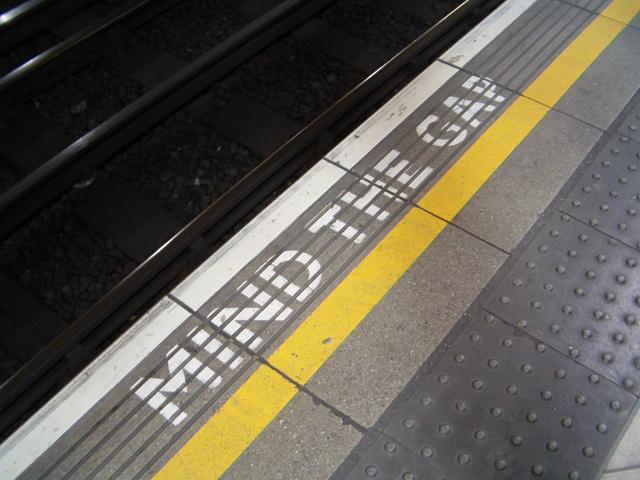
Mind the Gap
An issue that deserves some attention is the gap between what our school district educators and staff in leadership and support positions know about how so-called 21st Century/Personalized Learning ("21C/PL") can/could/should work and what they are doing to allow it to flourish and receive critical examination in our schools. Digital skills and literacy aimed at making relevant technology a regular component of education (more than just an elective) is built on a foundation going back about 12 years (to 1999), but hitting a critical juncture about 6 or 7 years ago. The emergence of the "21C/PL" jargon and the challenge to rethink aspects of program delivery are real tests of that foundation, and make it necessary to reflect on how decisions made in the last few years will affect the passage of "21C/PL" theory into practice. Rather than build on success and respect the existing diffusion models that work among educators, our district appears to be developing its model for change in isolation and/or contradiction of relevant evidence, existing resources (human and otherwise), input from practitioners, and research initiatives designed specifically to address, examine, and assess "21C/PL."
We've seen some interesting examples in the past year of how ubiquitous technology (tablets, mobile devices, etc.) could have a major impact on the classroom and for learning in general, both positive and negative. This is accompanied by a sea of literature and online content related to"21C/PL," often cliched or poorly understood but part of our reality nonetheless. We are surrounded on TV, the web, and print media with powerful new educational uses and apps for pods and pads, and hints at what makes tech-based learning work. Locally, UNBC prof Andrew Kitchenham has recently put out 2 texts/etexts on mobile learning strategies and blended learning environments (distance + face-to-face). Our board office staff have acknowledged a need to take these ideas seriously, and have even written them into various plans, and is beginning to use the "talk" (for better or worse) of "21C/PL." The problem remains that the milieu has shifted in our district from wide-spread interest and action in the use of innovative technology to frustration over the lack of communication and support. This has been compounded by the rejection of both relevant feedback and a number of "21C/PL" proposals which would have provided teacher and student experiences to put "21C/PL" theory through its paces. I've written and spoken on these ideas enough that I'll spare the details here.
For a reference, I take "21C/PL" to be any initiative that aims at one or more of these goals:
1. Greater involvement of parents & community by allowing/encouraging/facilitating learning opportunities outside of schools
2. Wider and more effective use of distance and blended learning environments
3. New flexibility for project, course, and program options/designs by students and teachers, including a new view or curriculum as a shopping list rather than a set of prescriptions
4. Removing barriers to the uptake of new technologies and teaching/learning that incorporates mobile devices, online or cloud-based learning objects, and interactive digital systems (e.g. social networks)
5. Changing role of teaching from directing student learning and leading the inquiry to that of facilitator or "guide on the side"
A number of elementary and secondary teachers, with varying levels of access and expertise with technology, continue to make forays into these "21C/PL" goals in their lessons, student activities, project construction, unit structures, and assessment. In an effort to increase the ambition and impact of their work, at least five "21C/PL" project proposals (learning team/funding grant applications) were floated last year, all of which were ironically rejected by principals or district staff (no one is quite sure who or why, although budget shortfall was never mentioned). At the same time, a presentation aimed at gathering input on district tech directions resulted in a gloss of the issues and a brush-off to the responses. These rejections, added to the platform change and the end of many district support systems and structures (notably the DTT), has created a shockwave of distrust between teachers and admin/district staff and has made the job of "moving forward" that much more difficult. In some respects it was unavoidable as the cutbacks of 2010 surely meant there would be less capacity (staff/money/vision) for technology leadership, coordination, and collaboration. Teachers and students are used to obstacles, and so the business of learning and experimenting with new technology continues, with or without the necessary supports. This is the current milieu in which we ask questions about what we do, and in which we look for more open and sensible answers from district leadership than we have had over the last two years, well documented in the district's tech feedback wiki (now expired), and various 57 Online forums.
The "historic" milieu is also important. Teachers and students (usually with district support) have been continuously trying, mastering, discarding, renewing digital technologies and associated methods for much of the last 12 years -- websites, movie making, blogs, wikis, podcasts, mashups, digital recordings and compositions for assessment, assembling evidence, and presentation. There has been a dynamic mix of content-creation and content-consumption, each fueled by different needs and skills, but both important for teaching and learning.
The year 2004 deserves a closer look. This was a time of tech coaches, a planned system of training and workshops starting with a scope & sequence but aimed at creative, student-centered transformations, coordinated/vertically integrated leadership (from asst super though admin, tech support, tech support teacher leaders, diverse teacher leaders, teacher practitioners, and students -- all more or less committed to the same goals). In that year (give or take a few months) TLITE's first cohort was underway (SFU diploma in tech-based teaching & learning), Tech for Learning Leadership Team was established, "Key Tech Contacts" picked at every school, the District Tech Team created its first Tech Standards document, and it was the last time we saw a collaboratively constructed District Technology Plan for Student Success. 2004 marked the beginning of a process of standardization which ultimately led to the computer greening program and platform consolidation.
2004 was also when the work of "QLG" wrapped up. The Quality Learning Globally group assembled teachers and admin/district staff, most of which were tech leaders, to inquire into some key problems emerging with tech-based learning. Among other things, they met about 8 times, studied, and experimented with distance/blended/synchronous/asynchronous environments -- an early and intense look at what we now call "21C/PL." The QLG research concluded with a number of observations aimed directly at three connected questions faced by (and encouraged by) the district:
We've seen some interesting examples in the past year of how ubiquitous technology (tablets, mobile devices, etc.) could have a major impact on the classroom and for learning in general, both positive and negative. This is accompanied by a sea of literature and online content related to"21C/PL," often cliched or poorly understood but part of our reality nonetheless. We are surrounded on TV, the web, and print media with powerful new educational uses and apps for pods and pads, and hints at what makes tech-based learning work. Locally, UNBC prof Andrew Kitchenham has recently put out 2 texts/etexts on mobile learning strategies and blended learning environments (distance + face-to-face). Our board office staff have acknowledged a need to take these ideas seriously, and have even written them into various plans, and is beginning to use the "talk" (for better or worse) of "21C/PL." The problem remains that the milieu has shifted in our district from wide-spread interest and action in the use of innovative technology to frustration over the lack of communication and support. This has been compounded by the rejection of both relevant feedback and a number of "21C/PL" proposals which would have provided teacher and student experiences to put "21C/PL" theory through its paces. I've written and spoken on these ideas enough that I'll spare the details here.
For a reference, I take "21C/PL" to be any initiative that aims at one or more of these goals:
1. Greater involvement of parents & community by allowing/encouraging/facilitating learning opportunities outside of schools
2. Wider and more effective use of distance and blended learning environments
3. New flexibility for project, course, and program options/designs by students and teachers, including a new view or curriculum as a shopping list rather than a set of prescriptions
4. Removing barriers to the uptake of new technologies and teaching/learning that incorporates mobile devices, online or cloud-based learning objects, and interactive digital systems (e.g. social networks)
5. Changing role of teaching from directing student learning and leading the inquiry to that of facilitator or "guide on the side"
A number of elementary and secondary teachers, with varying levels of access and expertise with technology, continue to make forays into these "21C/PL" goals in their lessons, student activities, project construction, unit structures, and assessment. In an effort to increase the ambition and impact of their work, at least five "21C/PL" project proposals (learning team/funding grant applications) were floated last year, all of which were ironically rejected by principals or district staff (no one is quite sure who or why, although budget shortfall was never mentioned). At the same time, a presentation aimed at gathering input on district tech directions resulted in a gloss of the issues and a brush-off to the responses. These rejections, added to the platform change and the end of many district support systems and structures (notably the DTT), has created a shockwave of distrust between teachers and admin/district staff and has made the job of "moving forward" that much more difficult. In some respects it was unavoidable as the cutbacks of 2010 surely meant there would be less capacity (staff/money/vision) for technology leadership, coordination, and collaboration. Teachers and students are used to obstacles, and so the business of learning and experimenting with new technology continues, with or without the necessary supports. This is the current milieu in which we ask questions about what we do, and in which we look for more open and sensible answers from district leadership than we have had over the last two years, well documented in the district's tech feedback wiki (now expired), and various 57 Online forums.
The "historic" milieu is also important. Teachers and students (usually with district support) have been continuously trying, mastering, discarding, renewing digital technologies and associated methods for much of the last 12 years -- websites, movie making, blogs, wikis, podcasts, mashups, digital recordings and compositions for assessment, assembling evidence, and presentation. There has been a dynamic mix of content-creation and content-consumption, each fueled by different needs and skills, but both important for teaching and learning.
The year 2004 deserves a closer look. This was a time of tech coaches, a planned system of training and workshops starting with a scope & sequence but aimed at creative, student-centered transformations, coordinated/vertically integrated leadership (from asst super though admin, tech support, tech support teacher leaders, diverse teacher leaders, teacher practitioners, and students -- all more or less committed to the same goals). In that year (give or take a few months) TLITE's first cohort was underway (SFU diploma in tech-based teaching & learning), Tech for Learning Leadership Team was established, "Key Tech Contacts" picked at every school, the District Tech Team created its first Tech Standards document, and it was the last time we saw a collaboratively constructed District Technology Plan for Student Success. 2004 marked the beginning of a process of standardization which ultimately led to the computer greening program and platform consolidation.
2004 was also when the work of "QLG" wrapped up. The Quality Learning Globally group assembled teachers and admin/district staff, most of which were tech leaders, to inquire into some key problems emerging with tech-based learning. Among other things, they met about 8 times, studied, and experimented with distance/blended/synchronous/asynchronous environments -- an early and intense look at what we now call "21C/PL." The QLG research concluded with a number of observations aimed directly at three connected questions faced by (and encouraged by) the district:
- What should distributed learning look like... should it occur at many schools and be integrated into the options faced by students (course selection) and teachers (course design, career specialization), or should distributed learning be the purview of our distance ed school?
- What technology should we use, and why... virtual classrooms, CMS, platforms, peripherals, access issues, budget & greening issues, what works in various contexts?
- What pedagogy emerges from, or shapes, the technology and the choice of delivery models... synchronous vs asynchronous, what degree of "blending," how is the vision, coordination, and support sustained in schools and in the district?
The research looked at teacher and student experiences in contexts that explored as many of the possibilities brought up by these questions as possible. The QLG group asked these questions from the perspective of teachers and students, and in the end recommended:
- Distributed Learning should happen at every school, at any time in which teachers in these schools were willing to experiment in such a way that could be supported by administration. Teachers excited to try teaching an online course or increase the amount of interactive technology they use with regular classes are the best bet for success. Dumping online course work and new tech on unwilling teachers will not work and will halt any momentum built elsewhere. While the integration of distributed learning has a logical place at the secondary level, it should be placed within the continuum of integrating all forms of teaching and learning strategies that make use of rich media and interactive technology, not just the ones that lead to more independent (distant) student learning. This has implications for the continued promotion of technology skills and digital literacy among staff and students, and commitments to support, training, and leadership.
- Online and distance learning works best when the students are also connected to a learning community and teachers -- real people (with bodies and nuanced expression) and real social environments that are essential for human development, so some face-to-face is a must except for special cases and for most should be the the primary experience, even at higher grades. The group spent a lot of time on the creative/collaborative/critical process involved in building and analyzing content (distributed "learning objects," resources , courses). Some felt there should be an attempt to build original, professional resources specific to BC curriculum contexts, while others were confident that existing online (free/external) resources would increasingly meet learning needs. This has implications for inter-school communication/collaboration and the coordination of some aspects of course programming across the district.
- Technology and distributed learning should not remove and try to replicate the best of the classroom experience, but should seek to revolutionize the worst and most problematic aspects of the classroom experience. Thus virtual classrooms that imitate real discussions are often a step backward unless no alternatives exist. Just as the powerpoint can take a meaningful presentation and turn it into something segmented, trite, or didactic, interactive technology can create addictive, self-absorbed recluses where once were curious, social kids. The group was confident that the interactive web could extend and enrich but not replace the social fabric of schools. This has implications for school and district tech direction, planning and licensing.
These conclusions were, for the most part, rejected or ignored. They were supported by then principal of PGSS (later an asst superintendent), but the "discussion" at the board office supported a focus on the distance ed school (rebranded the CLA) rather than widespread uptake of distributed learning and tech-based blended learning environments at many schools. PGSS was given a few "backdoors" to continue practicing some distributed learning (license shifting to allow videoconferenced classwork with McBride, more use of Coolschool, etc.). CLA took a couple of years to ponder on this and then very slowly began the process of moving courses into Moodle and offering more online learning opportunities. Some tech innovation grants created pockets of creative teaching & learning embracing these (or similar) conclusions. This helped offset the need for regular, meaningful conversations and collaboration with teachers.
These exceptions aside, the district has closed the door on most "21C/PL" projects and the buzz around educational technology has faded. Questions and invitations to dialogue from tech-leading teachers to the SBO staff remain unanswered. The coherent tech plan (which, at a minimum, was supposed to explain what's going on, why, how, when), promised in April 2010, has still not materialized. The extensive feedback on the March 2011 announcements about tech directions have been utterly ignored -- even the SBO's own plans to follow-up on the announcements appear to be on hold indefinitely. The means for collaboration on technology problems (wikis, social networking, etc.), and the external encouragements (e.g. consider Dr. Kitchenham's new texts), have never been more readily available, and yet we have entered a period of stagnation and confusion and "go it on your own" that has taken us back about 12 years, although it is still possible to see the curiosity if not the energy that accompanied the heady days of shocking new technology.
This analysis may sound a bit cold, but personally, I can't wait to be proven wrong -- those who know me realize I'll be the first to celebrate an end to dysfunction. I also realize that our SBO may no longer have the staff (budget) to keep up with the level of engagement expected by teachers. More importantly, I don't mind the chaos... it makes it clear that I have to design my own learning systems, many of which bypass technology, if I want to create rich environments for my students, and find like-minded people to help. The school district has lost the capacity to "play" at this level with the current level of funding and choice of directions. I'm ready to be challenged on this, to be shown examples of how dynamic "21C/PL" experiments are working and have also been supported by schools and the SBO. I also realize, as others have pointed out, that the technology itself, the "stuff," is not the commodity in education or our school district, the commodity is the collection of teachers and students who are excited to learn and are willing to use relevant technology to do so.
Despite my many rants on technology and educational design, I am not generally excited with the majority of implicit promises and changes suggested by "21C/PL." The most interesting part to me is not the technology or the changing roles but the possibility that more community-based learning will allow more teens to get out into natural environments more often, do something to address the "Nature-Deficit Disorder" that has grown with the digital age. I am also concerned about the effect technology has on the teenage brain. My wife, for whom this is an even more important issue, suggested this CBC piece to help make my point: http://www.cbc.ca/video/#/News/TV_Shows/The_National/1233408557/ID=1954482931
The "it" of "21C/PL" is hard to define, and for many simply means an examined life as a teacher that is willing to innovate and experiment habitually. Bring "it" on, we're ready for it, many of us have been doing it for 10 years and already know which parts to take or leave, and the SBO must surely know by now that we're also ready to talk about it whenever you're ready... you know where to find us.
Tuesday, August 30, 2011
Monday, June 13, 2011
gaming / learning
Watch the full episode. See more Digital Media - New Learners Of The 21st Century.
This stuff sure pulls me in two directions... there are some aspects of this that appeal to me, and so much else that seems dystopian. The idea of a class without walls and guild approach to learning has always appealed to me, but I'm concerned that this approach has been derailed by corporate interests and a misreading of what self-taught looks like in kids compared to adults. Neither a fan nor stalwart critic, I need to "interrogate" the paradigm presented in the video because I want to know what I can learn from it. I'm left with questions about:
How does society, consciousness, ethics, sense/value of history change when knowledge is accessed on demand rather than stored in the brain? Are we still intelligent if we just rely on problem-solving skills and a personal interpretations? Are we independent simply because parents and teachers have left us to be peer-raised or raised by whoever dominates broadband?
The video features a wealthy school and tech array designed for self-indulgence. How can "21st century education" build interdependence without narcissism? How can the poor benefit from this approach? How can cash-strapped schools embrace a vision without being willing to foot the bill? How will Aboriginal Learners fare in this environment? (I can see some scenarios in which the concepts actually align better with a Aboriginal approach to learning, but also some barriers)
What do these "21C" ideas look like if we take the technology away? Is is really a new approach to education? Do none of these qualities appear in traditional classrooms? Is it the revolution or change in thinking the experts describe, or do they just make the contrast greater so they can sell their unique product? Half the time I wonder whether public institutions pick up the "21c" stuff in order to reduce costs.
Gaming addictions are just passion for learning (bit at 13 minutes)? Really? What about the whole area of health, avoidance, procrastination, and social interaction?
I'm curious to hear some of your thoughts on this video and the broader topic(s) it suggests.
Labels:
21st century learning,
education,
gaming,
technology
Monday, June 06, 2011
Stunt in the Senate

Senate page and her silent protest during the throne speech... CBC's version here, including the press release issued by the page, Brigette DePape:
"Contrary to Harper's rhetoric, Conservative values are not in fact Canadian values. How could they be when 3 out of 4 eligible voters didn't even give their support to the Conservatives? But we will only be able to stop Harper's agenda if people of all ages and from all walks of life engage in creative actions and civil disobediance," she says.
"This country needs a Canadian version of an Arab Spring, a flowering of popular movements that demonstrate that real power to change things lies not with Harper but in the hands of the people, when we act together in our streets, neighbourhoods and workplaces."
Or, another take on the page protest:Harper stunt interrupts Canadian statement delivered by DePape
Saturday, June 04, 2011
In Defense of Libraries
LIBRARIANS FIGHT FOR A ROLE IN A DIGITAL WORLD http://www.theglobeandmail.com/news/technology/digital-culture/social-networking/librarians-fight-for-a-role-in-a-digital-world/article2023169/
The article was timely for me, as I was thinking lately about how various applications of so-called 21st Century Learning pose challenges to traditional roles in our education system, including libraries and librarians. If you're unfamiliar with the "21C Ed" collection of ideas, don't feel left out... it is a bit of catch-phrase for anything new in education, but often includes a few basic characteristics:
-students can/should learn more independently
-students should have more choice about what & how they learn
-teachers should do less direct instruction and more direction towards resources and opportunities
-students should learn more out in the community and less in schools
-parents should have more opportunities to co-develop learning environments and designs
-all of these things should make better use of digital technology and web resources
There is no single definition, but these links provide a few different views on what "21C Ed" looks like:
http://www.21learn.org/site/archive/about-the-initiative
http://www.youtube.com/watch?v=zDZFcDGpL4U
http://www.standard-freeholder.com/ArticleDisplay.aspx?e=2779372&archive=true
http://educhatter.wordpress.com/2011/01/18/the-“21st-century-schools”-movement-is-burying-the-past-the-wave-of-the-future/
http://www.gov.bc.ca/premier/technology_council/news.html (try the reports to see the BC gov's vision for education, albeit from the last premier and with no real idea about how to bring this about -- other jurisdictions have had to either commit serious time/money or force of legislation to make these kinds of changes)
21 Signs You're a 21C Teacher http://www.technologybitsbytesnibbles.info/archives/4595 (this one presents the real dilemma to me - some of these things are great and I've tried them for years, others, I think, are destructive and promote disassociation)
http://www.bctf.ca/IssuesInEducation.aspx?id=23050 (this positions"21C Ed" as anything innovative, especially if it involves technology; the BCTF seems to struggle between embracing innovation and change (as it needs to do from time to time) and offering critique to ideas that erode teacher autonomy or shake up the school system)
I've got criticism and praise for different aspects of these ideas from a purely educational point of view, but the Globe & Mail article reminded me it will probably be used as a cost-savings measure in our school system. The rhetoric is often buried under terms like "choice" and "flexibility." If one follows the reasoning, students of the future will need less teachers and fewer schools, and will need more apprenticeship-like opportunities, greater choice about what and how they learn, and better guidance through digital resources and and technologies. My reserved praise relates to the angle of deschooling society, an old idea that becomes more relevant when school culture supplants key aspects of family and society-based culture (see Illich's work, or Gatto's at http://www.preservenet.com/theory/). One of my concerns, however, is that the "21C Ed" ideas seem to assume that the trend towards our students being peer-raised and emotionally detached is inevitable (see Gordon Neufeld's work on this topic e.g. video clip on parenting), and that a narcissistic technology-addicted lifestyle is conducive to deep learning and social growth. I think this trend, unexamined, is a sure way to build a dystopia. We can only deschool society if we have something better suited to educate kids in a way that leaves them whole, connected, balanced, intelligent, and useful. Allowing students to follow their own technology-enabled course of study (and personal development) will only work for a very few students, probably those who can set their own standards and start with a socioeconomic advantage.
So, how does this relate to schools and what does a library look like when the traditional roles are being challenged? If anything, "21C Ed" tries to make librarians out of all of us -- directing students to appropriate resources, effective use of educational technology, facilitating learning alongside guidance in ethics, critical thinking, habits of mind, and multiple intelligences/literacies. I'm not sure how realistic this is, but I could see it as an excuse to follow the trend mentioned in the Globe article. Librarians will likely be in a defensive position over the next few years (already have been?), alternately defending the impact they have on people and learning, or reinventing their programs to meet new challenges.
I would like to share some thoughts drawn from observations of our library at D.P. Todd Secondary School. Perhaps these traits are common at all libraries, but my experience has been shaped by the library I know. The librarian Sandra will forgive me if I idealize some of her contributions, but I also know what a dysfunctional library looks like and I'm so very glad to celebrate one that is working well and has set a positive model for the emerging librarian.
Meeting place: The Market of Ideas
Our library is fortunately positioned at a crossroads in the school, especially for staff... some schools have libraries tucked in a corner or are tangential to the traffic. The result for us is an inflow of people and ideas all day long. It is by the librarian's desk (which is not hidden in a back room) or the circulation counter where many staff pause and work something out. It is a neutral ground for a good argument, or a critical examination of a school issue -- the classroom is too private and "turfed" for staff discourse, just as the hallway is too public and unmediated. The librarian often finds herself playing facilitator, referee, and instigator (e.g. when new ideas are needed), or simply someone to ask how's it going and mean it. Many students, especially seniors, head to the library to orient themselves in the morning or wrap up loose ends at the end of the day. It is our only lecture hall (grad meetings, guest speakers, etc.) and is one of the few places that can be easily reconfigured to suit a purpose. Like a marketplace or town square, the "meeting-place" quality extends into ideas as well as physical encounters. The librarian resides at the centre of the collaborative culture of our school, bridging school-wide goals and programs precisely because she has to deal with every kind of idea and problem, not just those specific to a subject area. While this relationship between librarian, ideas, and passers-through often begins with a book, it invariably progresses to other media and a deeper conversation. Our librarian knows the reading habits of kids because she knows the kids -- they arrive with a completed book and she asks them about it, what they liked and didn't, what they want to try next. She often has a next book waiting. In return the students open up and provide the kind of introspective reader-response English teachers would pay for. The "mode of literacy" is not just about the books, it can be about what the students use on their phones and ipods, the knitting (and knitting books) set out for students who need to unwind, the start of a video editing or cartooning project, the book and media displays that coincide with current events, and the websites recommended to put a twist on someone's line of inquiry.
Skills and Contexts
As a true learning lab for the school, the library has become associated with two ends of a spectrum that are often missing in a classroom -- research skills based on critical thinking (separate from curriculum), and deep curricular contexts explored through sourcework (that are often beyond what "comes up" in the classroom). These are the zones in which the librarians shine and apply diverse strategies: storytelling to model self-inquiry, table-by-table group brainstorming and division of tasks, decoding a special photo or passage or map, preparation of websites and webquests to redeem the time spent at computers, small group circle-time to work out issues. Because the librarian knows a bit about almost everyone that comes in, she can match resources, learning objects and webtools to individual students -- the practice of personalized learning. Behind the scenes is some expert resource selection (books, digital tools and media, etc.) that requires intensive collaboration with staff and students. The library has been culled of what doesn't get read or used, and is replenished with requests and artfully anticipated hits-in-waiting. The librarian is also the usual suspect for the introduction of new technologies -- 7 years ago it was educational blogs, now it might be a request for e-readers or a pro-d session on apps. In some magic time between class visits and needy students, the librarian also finds time to set-up Olympic-themed events with books, displays, and big-screen live coverage, a tea party for the royal wedding (with books, displays, big-screen coverage and those little sandwiches), or a Harry Potter Event, a card-making station set out for mother's day, and so on. The librarian isn't trying to "get through" curriculum or teach Socials, Science, or English. She is offering cause & effect, pattern recognition, assessment of significance, interpretation of meaning, application of judgement, comparison of sources and evidence, and venturing into multiple intelligences. As a classroom teacher, it becomes easy to beat the same drum and try the same tricks, but the librarian starts with the premise that a trip to the library is a chance to explore ideas from a fresh perspective, to gain something for the teacher and students that can't be had just a few feet away in a different room. It is the emphasis on critical thinking and deep contexts that sets the library apart from the classroom which has the added burden of a curricular calendar and a fixation on evaluation.
Island in the Stream
Libraries are often a place for students to take a break from the intensity or monotony of classroom experience -- the librarian and her space round out the "whole education" students receive at school. Like an island, it is a calm place to stop moving and reflect on the journey -- read something, talk to someone, look something up, get caught up, spread one's things out and get organized. Some students on spares really do look like they've just clambered out of a swamped canoe -- the library is the safe place where they can get their act together before facing a tough class or difficult conversation with a teacher. The librarian walks this island and offers help, comforting words, a voice of experience, listening, and a fresh perspective. She seeks out the students (and staff) who are most in need and takes a very human approach to coaxing some productive action -- less formal than a counseling appointment but usually more one-on-one than a classroom teacher can afford, a balanced "boundary-zone" in which the practice of empathy is viable. Students enter high school and have a kind of conversation with themselves that lasts for 5 years -- they pose questions about their own relationships, reading, thinking, emotions, body, behaviour and gather "evidence" each time they come to school -- they live the teenage life but they also imagine it endlessly, playing out possibilities and speculating about "what-ifs." This all takes place in secondary schools which overwhelmingly are fragmented and chaotic. Staff find it difficult and sometimes unattractive to build 5-yr relationships with students, and yet the students beg this continuity from us -- they may constantly be pushed towards their peers, but I think we'd be surprised how many would soak up any time their parents had for them (if they weren't so busy) and, failing that, from other caring adults. The library forms one of the few welcoming spots where the students can attach and make sense of that five-year questioning -- and the librarian is a key part of that conversation -- a caring person who can often suspend judgement (e.g. doesn't have to assign a grade), but is nonetheless an adult with the long-term growth of students in mind.
Filling the Leadership Gap
Our district and secondary school administration are tasked with being educational leaders, and yet this is a part of their jobs they often do not get to. Most of their time is spent on the "business" of education, a variety of duties related to the community (e.g. student discipline and follow-up, parent inquiry, policy & process discussions, ministry requirements, etc.), the management of staff, and indirect efforts at affecting learning. Elementary admin seem to have more direct involvement, although they have many duties that pull them away from educational leadership as well. What's missing is the inspirational role, the task of teaching teachers. So who takes up the slack? Much of it goes undone or left to chance (e.g. follow-up on professional development, delving into school data, matching resources to teacher's expressed needs, etc.). The rest is delegated -- just as some administrative tasks that used to be shared responsibilities have been downloaded to counselors, many other educational leadership tasks are now completed by teachers and librarians. For the latter, these functions include review of professional material related to the craft of teaching and specific subject areas, assessing teaching and learning resources with a school-wide perspective, establishing a research (or inquiry) focus for staff practices, voicing the educational arguments and student perspectives in discussions involving budgets (particularly technology), judging trends in education (problems and possibilities) and setting new paradigms into motion, connecting the individual and collective learning trajectories and educational goals of teachers with relevant resources, and taking a lead role in the value-setting events in the life of a school (e.g. network ethics, plagiarism, cyber-bullying, tone at staff meetings, etc.) Suffice to say that if a librarian is good at these things, the school has a solid foundation for staff morale and program longevity, and that if these functions are absent the school runs at an emotional, professional, and educational deficit. it is often the librarian who picks up the pieces of a poorly or hastily planned initiative, plan, or dictate and makes it staff-friendly or gives it a pedagogical backbone. Administrators, Curriculum staff, and School Boards groups should thank librarians routinely and emphatically for taking up the torch when their part is finished. Our current teacher contract negotiations face demands for more management rights by the government's negotiator BCPCEA, in part to lubricate their plans for "21C Ed", but I don't think they realize how scared and unqualified a huge part of "management" is to take this on. If we want change is has to be a partnership and can't be administration directing teachers to use the latest jargon, which is where the commitment to change usually ends. Please correct me if I'm describing an isolated phenomenon, I would love to see the exceptions to this "torch dropping" become the norm.
These roles for librarians range from concrete to abstract, but all are invaluable in the culture and journeys of students and staff. If librarians were simply wardens of books, replacement teachers for resource-dependent class activities, and cataloguers, then their role would and should be in jeopardy. Similarly, if the librarian is concerned only with learning technology and new digital tools, she will again become superfluous as this is everyone's business and her only edge is that she has more time to evaluate resources. I would make the case, however, that the emerging librarian is someone our schools need more than ever. She is grounded in principles of learning, moves deftly through the terrain of ever-changing resources and technologies, has a mind to the whole development of others (intellectual, physical, emotional, social), is able to connect people to ideas using a variety of tools, anchors the professional development of staff, loves the kind of knowledge and passion for the world that comes (in one form) from the written and spoken word, and has created a welcome, safe place for thought, growth, research, and experimentation. In short, she nurtures the boundaries between all the disparate pulls in our learning communities, and both moderates the difference and spurs staff and students into thought and action. I don't think these qualities are new or "21st Century," but I do think they are the ones we should celebrate when we look at the role libraries play in the future of our education system, and not the books or the technology. My school would be heartless and cold without the library and librarian. Still, the promise of new interactive, personalized technology and the necessity for critical examination and experimentation is well suited for the library, and is probably one of the future criteria by which library programs will be judged. In the midst of this, the librarian's continuous learning curve relates somewhat to resources and technologies, but more importantly to finding the rich existential boundaries in which she cultivates habits of mind and meaningful relationships with staff and students.
Further reading:
Libraries in the Internet age http://www.thestar.com/opinion/letters/article/994225--libraries-in-the-internet-age
Area school libraries still popular, even if things are changing http://www.guelphmercury.com/news/local/article/534196--area-school-libraries-still-popular-even-if-things-are-changing
The Role of Librarians in the 21st Century
Technology is changing role of librarian into that of a teacher http://www.librarybeat.org/read/show/233
School Library Journal's 2011 Technology Survey: Things Are Changing. Fast. http://www.schoollibraryjournal.com/slj/home/890197-312/sljs_2011_technology_survey_things.html.csp
Labels:
education,
leadership,
library
Monday, May 30, 2011
Dare to Dream
A colleague recently wrote about the state of technology in our school district, particularly the encouragement to BYOD (bring your own device). She "dared to dream" about a transformative classroom practice, supported by a school district plan that showed understanding of emerging technology needs and how to say yes to teacher innovation. One of her main points was that:
She went on to suggest that:
We, teachers, should not be expected to "lay out" and purchase things for our classrooms (although many of us do)...I think that was the unspoken, perhaps unintentional savings in the computer platform consolidation that occurred in our district a year ago -- pass the cost of innovation (anything beyond the standard pc image) on to teachers. Unfortunately the result will be inequality of experience -- pockets of self-funded innovation, an emphasis on things you can do for free, and virtually no on-going district-level support structures to guide/plan/train/develop -- this loss of capacity was calculated cost of "right-sizing."
She went on to suggest that:
something is missing - the educational component. No one seems to be advocating that point... well a few others have been trying, but it seems to fall on deaf ears... I continue to believe it shouldn't be the technology that drives the teaching. The teaching should drive the technology. Our district has this backwards. Until our district does want to focus on the educational aspect, I am officially done with trying to help move this district forward. I look forward to next year teaching in my classroom and focusing on my students. The utter silence from our 'leaders' in this department speaks volumes.My response:
If the School Board Office wanted to turn this around, I would suggest three starting points:
1. Answer some of the questions and address some of the descriptive feedback that have been posed of the SBO by teachers regarding technology-related policy, communication, leadership & training, decision-making, finances, direction, and pedagogy.
These topics have been dodged for long enough that it is very hard to find teachers who are not cynical about the state of technology at the district level. Virtually all of these questions come from respected past and present technology leaders in at least six district high schools and many elementary schools. The common themes in these questions have been consistent for about ten years (and are a sign of healthy discourse among educators), although the tone of the questions has changed in the last five as the dialogue on technology has gone from functional to dysfunctional.
2. Conduct a qualitative analysis of the comments left in the District Technology Feedback forum as part of ongoing needs assessment.
The SBO should maintain an active public database of the state of technology -- both the needs of educators and a sense of what they use technology for. If the SBO is not in tune with the dynamic narrative of student digital literacy and the work teachers do to harness technology for learning, it will relegate itself to a place of continual derision and suspicion. The goals of regular input, feedback cycles, and needs assessments should include (but not be limited to) a robust inclusive technology plan that teachers and the wider community can be proud of and take seriously. Other goals of the data-gathering (or story-gathering) should include training/inservice, professional development, collaboration & shared leadership, assessment & invitation for critique, and celebration.
3. Do some basic identity-defining work on what kind of place the district wants to be from the point of view of educators looking to find support or inspiration for their practice with technology.
Does the SBO actually want to encourage collaborative culture? Is it legitimate for educational decisions to be made without the affected educators present, especially when they are easily located and have consistently and dramatically volunteered their expertise in the past? What was wrong with the DTT that led to its demise? What could fix that, or replace what the DTT was meant to offer (e.g. collaboration and inclusive decision-making)? If the SBO can't keep up with the expectations placed on it by educators, or can't envision the capacity required to have a high-functioning district-level set of supports and pedagogies, what needs to change with the way service is provided, standards are created, and decisions are made?
1. Answer some of the questions and address some of the descriptive feedback that have been posed of the SBO by teachers regarding technology-related policy, communication, leadership & training, decision-making, finances, direction, and pedagogy.
These topics have been dodged for long enough that it is very hard to find teachers who are not cynical about the state of technology at the district level. Virtually all of these questions come from respected past and present technology leaders in at least six district high schools and many elementary schools. The common themes in these questions have been consistent for about ten years (and are a sign of healthy discourse among educators), although the tone of the questions has changed in the last five as the dialogue on technology has gone from functional to dysfunctional.
2. Conduct a qualitative analysis of the comments left in the District Technology Feedback forum as part of ongoing needs assessment.
The SBO should maintain an active public database of the state of technology -- both the needs of educators and a sense of what they use technology for. If the SBO is not in tune with the dynamic narrative of student digital literacy and the work teachers do to harness technology for learning, it will relegate itself to a place of continual derision and suspicion. The goals of regular input, feedback cycles, and needs assessments should include (but not be limited to) a robust inclusive technology plan that teachers and the wider community can be proud of and take seriously. Other goals of the data-gathering (or story-gathering) should include training/inservice, professional development, collaboration & shared leadership, assessment & invitation for critique, and celebration.
3. Do some basic identity-defining work on what kind of place the district wants to be from the point of view of educators looking to find support or inspiration for their practice with technology.
Does the SBO actually want to encourage collaborative culture? Is it legitimate for educational decisions to be made without the affected educators present, especially when they are easily located and have consistently and dramatically volunteered their expertise in the past? What was wrong with the DTT that led to its demise? What could fix that, or replace what the DTT was meant to offer (e.g. collaboration and inclusive decision-making)? If the SBO can't keep up with the expectations placed on it by educators, or can't envision the capacity required to have a high-functioning district-level set of supports and pedagogies, what needs to change with the way service is provided, standards are created, and decisions are made?
Labels:
education,
moving forward,
technology
Wednesday, April 27, 2011
why our district should lift the ban on tablets
A teacher recently posed a question in a local tech forum, related to emerging tablet technology and our school district's ban on tablet purchase, starting with ipads:
... and that's why we need to wait to see which device fits the bill the best (and for the best price). I really don't believe that we have to pay $400 per device. When tablets get down to half that, then we'll have something. Acer did it with their netbooks - previous to the Aspire One, Asus, Sony, HP, and Panasonic all wanted $600 for a portable computer - now, a few revisions later, with a larger screen, and a respectable hard drive, the prices of most netbooks are around the $250-$300 mark - where they should be. I don't particularly care whether it be Apple or Android, but I do want whatever device to be decently priced, be built to last and have lots of features. As for right now, with class sizes maxxed out the way they are (next year I'm looking at a grade 4/5/6 split with 30), I'd rather see students get teachers than over priced expensive shiney tech gadgets.
My response:
As you are I'm sure aware the discussion about peripherals and mobile devices is not just speculative and not simply about adding toys to the tech array at school. There were at least 5 mobile learning proposals put together by teachers this year, all involving so-called "21st-century Learning" and all seemingly right off the page from the recent District "vision" presentation on Tech Enhancement. All of these proposals were rejected. While no official response has ever been given as to why (despite teacher efforts to find out), five reasons have been suggested by board office staff or school administration -- some of which are mutually exclusive:
- No peripherals devices of any kind have been approved for purchase (although are necessary for the fulfillment of the "district vision") and no opinion has been considered as to specific devices -- this is still to come
- pc-compatible ipods/ipads are made by Apple are restricted as they are associated with Macs -- lumps peripherals in with operating systems
- The proposal decisions were site-based and it is a coincidence or mistake that the message to reject seems to have gone district-wide -- the only district-wide restrictions are on hotmail
- iPads and other devices are not peripherals but actually computers and thus need to conform to district tech standards which have not evolved to take on new technology
- Communication breakdown -- the source of the rejection shuffles between principal, tech support, senior admin, trustees, purchasing, senior learning team... the cutbacks of the last year have left some doubt as to whose responsibility it is to make these kind of decisions -- it used to be site-based (e.g. like buying a screen projector) with a oversight role played by the DTT (e.g. tech standards)
At least two of the proposals were designed to reduce tech costs at schools -- supplying partial sets of $250-$500 devices to round out student technology as an alternative to new lab purchase. The rejected district projects looked to be in the $2000 to $9,000 range and aimed at supplying better access and function that teachers were getting from $24000-$30000 labs. Other schools have inquired about allocating existing funds (e.g. greening grant) for portable devices vs fixed computers. These fit the "vision" but falls short somehow in the eyes of the board office. I understand that teachers can use whatever they want if they buy it themselves and don't expect system access or tech support, but this represents a serious erosion in the responsibility of the school system to supply learning resources and support learning conditions. And shy of fundraising or third-party grants, teachers can't afford to buy 15 iPads or Xooms. So, if the "vision" is to become reality we have to exchange some restrictions for some "can-do."
I understand the reasons given for caution and debate when buying the latest gadget, but there is something to be said for saying yes to teachers who are enthusiastic to actually move the district's vision from theory to practice. These are teachers who have successfully put energy and knowledge into past tech projects involving learning, and usually the ones who help spread ideas, skills, and habits among staff and students. The projects I've seen relate to student use of tech for research, reflection & assessment, special needs adaptation, communication, and presentation (aka learning).
The tech gadget-du-jour is not the issue in my mind, but rather the commodity of the teacher using something relevant and ubiquitous to affect learning and pull student habits from distraction to purpose. Educators don't need to agree on the best product or price, just let the desire of project-ready teachers guide the process. At the cost of a few thousand at a few sites, the district can learn all it needs to about a variety of devices, and will simultaneously save costs on computers, increase morale, and enhance learning. Meet enthusiasm, careful planning, and vision with a "yes" and stand back to see what happens.
I understand the reasons given for caution and debate when buying the latest gadget, but there is something to be said for saying yes to teachers who are enthusiastic to actually move the district's vision from theory to practice. These are teachers who have successfully put energy and knowledge into past tech projects involving learning, and usually the ones who help spread ideas, skills, and habits among staff and students. The projects I've seen relate to student use of tech for research, reflection & assessment, special needs adaptation, communication, and presentation (aka learning).
The tech gadget-du-jour is not the issue in my mind, but rather the commodity of the teacher using something relevant and ubiquitous to affect learning and pull student habits from distraction to purpose. Educators don't need to agree on the best product or price, just let the desire of project-ready teachers guide the process. At the cost of a few thousand at a few sites, the district can learn all it needs to about a variety of devices, and will simultaneously save costs on computers, increase morale, and enhance learning. Meet enthusiasm, careful planning, and vision with a "yes" and stand back to see what happens.
I'm reminded of what a big deal it was to buy two digital cameras for a Socials dep't back around 1998 -- open-the-floodgates controversy and all -- as you can imagine it ended up being a regular part of teaching and learning and didn't break the bank. Schools are now tossing out the old 2 megapixel cameras. Same with video cameras, digital projectors, smartboards, and now mobile devices -- they don't need regulation or standardization, especially at the pilot level. Very few require any kind of support and very few became decadent mass-purchases that are now obsolete (unlike the rows of business ed texts in our bookroom). It astounds me that there are still roadblocks for incorporating elegant, affordable tech in to classrooms, especially when it is the very tech that forms the backdrop for the district's "vision." The "no" has got to go. In the very least, the "no response" has got to go.
Labels:
21st century learning,
education,
ipad,
technology
Tuesday, March 29, 2011
enhancing learning
Our district's technology coordinator and the "senior learning team" (not sure what that is) recently announced a meeting about district technology directions called "Enhancing Learning." Having been around the block a few times, I thought some preliminary thoughts were in order.
There has been a steady erosion of teacher involvement in district-wide technology over the last few years, so this meeting comes at a very interesting time. I have a feeling they'll drag out a few "new" tools we "customers" can access or maybe hint at where the district and province is going with so-called 21st century learning. New role for social media and distributed learning, etc., maybe a youtube video about paradigm shifts, maybe that dreadful picture of the baby grinning over a laptop.
Unfortunately, the skills and attitudes necessary to build this capacity are in fact the very areas that are hindered by a SBO that blocks projects and technologies, denies access to students and teachers to basic interactive tools and wireless networks, ignores mobile learning, and excludes educators from key elements and stages of educational design.
The interactive web, use of tools like blogs, wikis, and podcasts, and the long list of rich media and web 2.0 apps are not new to our district -- they have been the basis of action initiative grants, leadership teams, tech coaches, DTT planning, and coordinated pro-d and training in our district since 2003, with its roots going further back to the first Tech Support Teachers and teacher-managed network and communication systems. These were all supported by the SBO and many schools, and were part of a movement by teachers and students exploring the integration of technology into learning, particularly members of the TLITE program but also anyone else who wanted to get a handle on how to redirect existing student technology towards learning objectives. We might call this "21st Century Learning," at least the part that involves technology, and the work continues piece by piece and school by school, but now without support or inclusion from the SBO. From the dawn of networks, servers, images, and maintenance in our district, teachers have been involved building systems alongside building content, curriculum, and designs for learning. It is understandable now that much of the system-work has been taken out of the hands of teachers (the pursuit of "secure/stable/standardized networks"), but it is offensive that the educational piece is also being pulled away from educators, the very people who put tech ed design theory into practice with students.
It wasn't always this way -- I felt well-supported by the SBO in pursuing deep teaching & learning projects prior to 2007, as have many others through structures, grants, pro-d, and purchases. I realize these "capacities" were expensive and perhaps not sustainable without modification, but the silence and stonewalling of the last year on a range of key technology issues and processes has broken the will of many teachers for district-wide thinking on technology problems. The loss is not just confined to morale and momentum but also includes years of investment in hardware, software, and training.
I hope for something more from this meeting, will be glad to be proven wrong and quick to admit it, but relevant past experience suggest a snow-job. Nonetheless, the SBO has some dedicated staff and I'm ready to listen and detach expectations. There are also many positive school-based stories around technology that deserve celebration, and perhaps the SBO knows this is where the interesting work takes place.
A few months earlier, I had posed these questions of the folks who are now setting up the meeting... perhaps I've set the bar too high but I'm hoping to see two or three of these addressed.
and our school district should ask specific questions like:
A few months earlier, I had posed these questions of the folks who are now setting up the meeting... perhaps I've set the bar too high but I'm hoping to see two or three of these addressed.
Every school district should foster inquiry around questions like:
- How is basic digital literacy different from the capacity for transformative uses of technology to affect learning?
- Where does the "digital divide" reside on this continuum, and how is it represented in the school district?
- What barriers still exist for district students and staff crossing the digital divide?
- What capacity does the district have for using technology to affect learning, and how is this assessed?
- How did this capacity come to be; what's the tech history in the district?
- What kinds of individual, school, district, and external (global/societal) factors and structures have influenced this capacity?
- How does the district envision the next ten years in educational technology and how it will react?
- From where (external, internal) should the district draw its knowledge of current practice and the impetus for its future goals?
- How are district, school, and classroom based tech initiatives planned, funded, assessed, celebrated?
- How are these "levels" part of a collaborative effort and how are they disparate trajectories?
and our school district should ask specific questions like:
- Does SD57 see a distict-level systems approach to technology planning as necessary and effective or does it see itself as primarily a support system for the variety of classroom and program based technology uses and initiatives?
- What people and structures (collaboration, decision-making, data collection & analysis, models, professional development) would have to be in place in SD57 to make a district-level systems approach effective?
- Do the tech needs of the non-educational parts of SD57 (e.g. offices) require different systems and standards than the frontline parts involved in teaching and learning?
- Why did SD57 avoid the input and ignore the data and advice of its own technology structures and technology teachers when making a platform consolidation decision in 2010?
- Why has their been no follow-up on the April/May 2010 committments by SD57 to supply a technology plan, specifically the part of a plan dealing with PC transition and pro-d support?
- What will SD57 do to replace or mitigate the many technology-centered support systems, processes, and planning mechanisms it has allowed to lapse in 2010?
- To what extent can SD57 still draw on the labour of past plans, experts, technologies, and processes or does SD57 need to acknowledge it has burned some bridges and needs to find new ways of connecting current and future theory and practice?
- How does SD57 plan to build new bridges with a new group of teachers who want to use and improve the way technology is used for teaching & learning; will this support take the form of directives, opportunities to connect & share, or funding for projects?
- How does SD57 plan to balance wide-spread generic technology needs with specific requests for innovative technologies and program allowances?
- How does SD57 plan to balance district-level network security and tech support with school-based decision-making and differentiation, especially when these pull funds and support in different directions?
What's at stake is a rare opportunity to address some of the disconnect between what happens at the board office and what happens in the classroom. Tech change, indeed responsible for some of this disconnect, can be a meeting ground or testing place to see if district, school, teacher-based planning can operate congruently. I would suggest that these groups can cut through politics and conflicting visions only if the tech change discussion is centered around how students (and others) can use technology to affect their own learning. This learning process has to be a creative one initiated by teachers and the district should be looking for ways to support this while at the same time providing standard service levels that provide a level playing field for a few basic computing environments. The district has seen a steady change in how technology decisions are made; the locus has slowly shifted over the last 12 years from teachers to others, and while this has achieved some district goals around networks, system stability, standardization, and fairness, there has been an unmistakable impact on teaching & learning for some key areas in the district that used to be centres of innovation and tech leadership.
Labels:
education,
technology
Friday, March 18, 2011
Collaborative models
It appears from the March staff meeting minutes that we will not have a choice about collaborative models at our April staff meeting other than inside/outside timetable. I am curious as to why we wouldn't use this opportunity to confirm or challenge the need for either timetable model. There is nothing in District Policy/Planning (see below*) that requires that we have an altered timetable to allow for a collaborative model, so a review of the need for formal collaboration time should be on the table -- without it we are stopping short of evaluating practice. There are, however, statements from the District Plan that confirm the importance of teacher driven and directed staff development (see below*), suggesting that choice to have any collaborative model should be a staff decision.
I am also curious as to whether the staff meeting decision is meant as a survey with binding results (which option do you prefer) or an actual motion on a collaboration model (which could be subject to amendment, debate, and points of order). I don't think we necessarily need Robert's Rules (we have tended to pick and choose parts of these in the past 6 years, with no apparent discussion as to criteria); but we may want to be clear about what is fair game for a decision and decision-making process and be ready with rationale to back it up. I think one of the reasons we've had a hard time finding a staff meeting chairperson is the uncertainty over protocol.
In some ways I do not relish a decision at all as I support the current model. I have derived some value from it, and have been active in pursuing a "works for D.P. Todd model" for many years, so I would prefer that it continue with some adjustments and reflection. It seems the least intrusive on classtime and is not burdened with some of the silliness we've seen at other schools. I know how my needs for collaboration are fulfilled and our current model serves a small but important role for me towards these needs.
However, I would also like to be principled about the decision-making process and so I am presented with a dilemma. Do I participate in the process given the lack of choice or program review, or do I abstain from the vote/spoil my ballot? I think this will depend on the research or evidence that is presented to justify the model choices, and the criteria that will be used to evaluate our choice. This is a difficult decision but necessary to consider when I measure it against my values as an educator, of which non-coercion is near the top of the list.
I realize that many people put time into evaluating collaborative and tutorial models, and yet the validation of their work and the strength of our selected model requires an unfettered school-based path of staff development (see below*). If we want a model to be fully owned and developed as a staff, the choice to implement it should come from staff. I think our current model deserves a longer run so it can be evaluated, but I am not seeing any evidence that it will be evaluated. Putting the need for any model on the table assures that evaluation is taking place.
My aim in sharing these thoughts in this forum is to apply critical thinking to all aspects of public education, something which is a shared responsibility among all educators.
*References
from p. 11 of the 2010-11 District Plan for Student Success:
[emphasis mine -- note Many but not All -- the presence and nature of models differ because staffs and schools differ]
from p. 36 of the 2007-10 District Plan for Student Success:
[emphasis mine -- encouragement but not requirement ]
[Note: the Plan listed 8 recommendations from an external review team and 45 actions planned in response, some of which were already part of practice in the district, some of which resulted in mandates, some as encouragement for actions, and some which did not happen at all]
I am also curious as to whether the staff meeting decision is meant as a survey with binding results (which option do you prefer) or an actual motion on a collaboration model (which could be subject to amendment, debate, and points of order). I don't think we necessarily need Robert's Rules (we have tended to pick and choose parts of these in the past 6 years, with no apparent discussion as to criteria); but we may want to be clear about what is fair game for a decision and decision-making process and be ready with rationale to back it up. I think one of the reasons we've had a hard time finding a staff meeting chairperson is the uncertainty over protocol.
In some ways I do not relish a decision at all as I support the current model. I have derived some value from it, and have been active in pursuing a "works for D.P. Todd model" for many years, so I would prefer that it continue with some adjustments and reflection. It seems the least intrusive on classtime and is not burdened with some of the silliness we've seen at other schools. I know how my needs for collaboration are fulfilled and our current model serves a small but important role for me towards these needs.
However, I would also like to be principled about the decision-making process and so I am presented with a dilemma. Do I participate in the process given the lack of choice or program review, or do I abstain from the vote/spoil my ballot? I think this will depend on the research or evidence that is presented to justify the model choices, and the criteria that will be used to evaluate our choice. This is a difficult decision but necessary to consider when I measure it against my values as an educator, of which non-coercion is near the top of the list.
I realize that many people put time into evaluating collaborative and tutorial models, and yet the validation of their work and the strength of our selected model requires an unfettered school-based path of staff development (see below*). If we want a model to be fully owned and developed as a staff, the choice to implement it should come from staff. I think our current model deserves a longer run so it can be evaluated, but I am not seeing any evidence that it will be evaluated. Putting the need for any model on the table assures that evaluation is taking place.
My aim in sharing these thoughts in this forum is to apply critical thinking to all aspects of public education, something which is a shared responsibility among all educators.
*References
from p. 11 of the 2010-11 District Plan for Student Success:
"The most effective staff development is that which occurs at the school level, driven and directed by teachers with the support and participation of the administrators. Many of our schools have developed timetables that allow for collaborative time for teachers, both within and beyond the regular instructional day."
[emphasis mine -- note Many but not All -- the presence and nature of models differ because staffs and schools differ]
from p. 36 of the 2007-10 District Plan for Student Success:
"RECOMMENDATION:
Continue to encourage and support collaboration within and among schools
ACTION:
Encouragement for schools to build in time for collaboration"
[emphasis mine -- encouragement but not requirement ]
[Note: the Plan listed 8 recommendations from an external review team and 45 actions planned in response, some of which were already part of practice in the district, some of which resulted in mandates, some as encouragement for actions, and some which did not happen at all]
Labels:
collaboration,
education
Wednesday, March 09, 2011
Mount Nyiragongo in Africa

Looks like something one would find in Mordor... check out the amazing photo essays at http://www.boston.com/bigpicture/. This photo came from the one on Mount Nyiragongo.
Subscribe to:
Posts (Atom)