Sunday, November 11, 2012

peace justice and remembrance

We had an interesting discussion in our library the other day about school Remembrance Day ceremonies. There seems to be a few basic ways these seems to turn out, mostly variations on the theme of respect for the war dead and remembrance of both the purpose, futility, and cost of war. Sometimes we dwell on the heroics, sometimes on the suffering. The students do a great job of putting the elements together, and often add something that shows they have gone beyond sentiment to probe into deeper symbols and meaning behind military remembrance. Some of us cringe at the "Pittance of Time" bits that equate quietness with peace (although I have more respect for that specific video once I learned it was based on the artist's actual experience). Everything has its place, I suppose, but we are often left looking for something else, something with an edge that might get students thinking about what is to be done with the sentiment.

I have written about this topic before -- Peace and Remembrance and the White Poppy (2010) and Peace and Remembrance, the Tight Rope (2011). This year I'm wondering what it would look like to transform our remembrance into some kind of call for social justice, restorative practice, an end to violence across society, a weeding out of the coercive tendencies in our institutions, a gaze towards what nonviolence and passive resistance has accomplished, and a rejection of war as a default means of resolving conflict.

I'm also concerned that the "Harper Government" is willing to exploit remembrance and rewrite some of the social and peacekeeping history of our nation and emphasize our warlike prowess. This aggressive persona is the one that they want to project on the world stage, and it is the kind of nationalist posturing that leads to armed conflict in the first place.  If we're going to interpret the symbols and conduct the ceremonies one way or the other (for they are never free of bias or instructive purpose), we should be adding Peace to the Remembrance.

I came across this when thinking about the topic http://epjweb.org/resources/lessons/social-sciences/remembrance-day-reading/ -- something along these lines might give a Peace and Remembrance Ceremony the edge it needs to go beyond regret for past grief and give us pause to ask if we've actually changed the conditions that lead to war. We don;t need to take anything away from respect for the war dead, but we should be more fixated on preventing future youth from becoming war dead.

Here's another possibility for a Peace and Remembrance Ceremony after a reading of In Flanders Fields:
We remember Lt. John McCrae, soldier, poet and healer: a physician enraged by the madness of what was then the world’s most deadly war ever, he could not then see any other way but to ask us to take up his quarrel with his enemy. Now freed from bonds of time and space, now seeing all things clearly, perhaps he would ask us to take up an even brighter torch, to battle an even more deadly foe: to take up the torch of peace, to do battle with all that separates brother from brother, sister from sister.

Wednesday, November 07, 2012

Making Connections to Traditional Knowledge


My Social Studies 9 class has been working on a project off and on over the last few weeks -- an exploration of Heritage Skills. We do this as a tie-in to the Industrial Revolution and as a precursor to the full-on Heritage Research project our school's students complete in Social Studies 10.  Five of the SS9 projects stand out for me right now (still more presentations to come). I'm very proud of what they did with their guiding questions:

1. KM shared the story of Norwegian flatbread with us... krumkake... sort of a waffle cone, but rolled and stamped with careful designs. The recipe was a family favorite and helped them make a direct connection to their Scandinavian roots. Of course, she spent a few hours making up a big tasty batch for our class to try. The heritage skill lies in the preparation, use of special tools, and choice of fillings.

2. FJ put together an visual explanation of why she and her family dried fish. Everything she expressed was what she "knew" -- no obligatory internet surfing to add random details... refreshing. The traditional methods have been passed down in her family for generations, and she plans on passing it on to her kids and grandkids one day. Her smokehouse is a special place, filled with strong memories to go with the familiar smells. Two big strips of dried fish were wrapped and taped to the poster... FJ ate one and I ate one... perfect! The heritage skill lies in the options for catching, preparing, drying, curing, and smoking the fish.

3. SR shared his grandfather's passion for woodworking and the art of Intarsia -- locking in wooden elements to form an inlayed textured mosaic, a mix of clever design and skill with wood.  The examples he shared were ones that came from his house, a reminder of his grandfather's presence even though he lives a few hours away. Some of the Intarsia objects wee small and intricate, others as big as a chalkboard. The heritage skill lies in the mastery of wood and tools.

4. AC explored the history of the horse and buggy -- where, when, why, etc. Her grandmother remembered riding with horse and buggy as a kid, and we had some fun speculating what would happen to society if we had to go back to this form of transportation (pros & cons). The heritage skill lies in the care of animals and equipment. I mentioned that my dad, born in 1936, and the oldest of 8, used to get the horse and buggy set up each morning, load up his school-age siblings, and take them to school every day... as a 9-yr-old!

5. MS shared the "Portuguese Passion for Bread" -- a foray into both family tradition and a way of making bread that few people take on anymore. MS shared what she learned from her grandmother, this sparked similar stories in the class -- a quick survey found out that creation and consumption of homemade bread was more common than expected. The heritage skill lies in the attention to ingredients, process, and time, plus the careful (ancient) working of dough.

I'm looking forward to more projects this week on carving, speaking the Carrier Language, ranching, square dancing, and others.  We learned about canning today -- peaches, pears, and fish -- each one a grandmother's favourite for the three students presenting. Projects can be tricky with some classes -- the disorganized students have a hard time sticking to the timeline to get this done, but it's also a great way for students that struggle in other areas to engage with the learning outcomes and get some success. I think the key is making some connection to student identity -- in this case an interview with a family member.

Traditional Knowledge, whether it's an Aboriginal custom, indigenous way of approaching subsistence or simply an old and preserved cultural practice, comes to us like a gift from our ancestors. Who knows what skills are resting in our bones, placed their by our forebears and waiting for a trigger, waiting to be relearned and reborn for the next generation. In an educational world swamped with technology-induced urgency for change, these projects are a calm and focussed reminder of what really grounds us to each other and the dirt beneath us.

Monday, November 05, 2012

staff mtg course presentation


It's official... time to let my staff know where this is going. What started as a set of ideas about course combination and imaginative content, and became a project in curriculum and learning design is ready for the next level.

This course proposal for D.P. Todd Secondary will see English 11 and Geography 12 combined in a blended learning environment. Students enroll for two blocks of course work, half of it class-room based and half of it outside of class with individual, group,and seminar work. The "blend" refers to both the mix of traditional lessons with flipped or flexible learning, and the mix of in-school with distributed (e.g. online) content and coursework.

We will emphasize self-reliant learning, developing personal learning networks for students, cross-curricular themes, performance-based assessment, interactive technology, social learning, and exploring horizons of significance and authenticity.

In short, a new way for Grade 11 students to complete two courses with compelling curriculum in a two-block program that blends different approaches to teaching and learning.

Space permitting, this program will also allow Grade 12 students to audit parts of the double-course offering and complete a single grad credit board-authorized course: Middle Earth 12.

Comments and feedback welcome. An open planning site for this course can be found at http://dpts.sd57.bc.ca/~gthielmann/middleearth or at http://landspeak.blogspot.com

Saturday, November 03, 2012

School Plans

Our school's annual "Plan for Student Success" is at a crossroads.

Now a post about school data and goals might seem a bit dull for most, but I wanted to do a bit of work here to clarify my own thoughts about school growth cycles and lay out some history for my school's staff, some of whom are new to the process.

I want to begin by differentiating between the ongoing work we do to affect students learning, to make connections with students, to hone our craft as educators and so on, from the reports we file about how our school, as a whole, does this. I have read about thirty of these official School Plans in our school district (we call the School Plan for Student Success or SPSS), as well as the overall District Plans over the last few years, and have crafted or helped write five of them at my own school. These shelves full of plans are read by few, but are nonetheless required documents in British Columbia. They sometimes tell the story about how professional learning, reflection on data, and strategic actions translate into student success, but more often these documents contain shifty data, goals too broad to be useful or too complex to ever gain traction, and usually hinge on assumptions that teachers find themselves too busy to fully explore. I would also say that elementary school plans are generally simpler (more elegant?) than the secondary ones, and enjoy a higher level of buy-in from staff (and probably impact on students).

Here's what we've seen at my school:
2012 no formal plan?; used compiled feedback from staff
2011 diverse department goals
2010 diverse department goals
2009 break out school-wide literacy goal into dep't goals
2008 school-wide goal: cross-curricular literacy
2007 school-wide goal: cross-curricular literacy
2006 wrap up dep't goals & prioritize for school-wide goal
2005 department goals
2004 departmental and small group strategies responding to school-wide data
2003 departmental strategies responding to school-wide data
before 2002 the "Accreditation process" was used

The SPSS is a School Achievement Contract or Growth Plan (ie. ensuring student learning needs are met) that was introduced provincially in 2002 along with the School Planning Council (SPC) -- a team consisting of the principal, three parents elected by PAC, and a teacher elected by staff. The inclusion of teachers on SPCs has been boycotted by the BCTF since 2006. According to the BC School Act, the SPSS requires annual consultation, review, and approval by the SPC, and when this does not happen it defaults to the principal to submit the plan. The only references I could find to the School Plan in the School Act were in Section 8.3 (p. C-22). The defacto local policy until recently was to have a paid teacher position (usually one block) that includes SPSS-writing duties (secondary level), or a team of teachers/admin with varying levels of release time (elementary).

The SPSS looks different from school to school, district to district, is sometimes group-based (e.g. department) or school-based (common goal/s) although there is no policy about this at the school, district 57, or provincial level. Elementary schools, particularly those with small staffs, have often had an easier time focusing on school-wide goals (and collective problem-solving), while secondary schools are all over the place. Fragmentation of goals seems to result from diverse subjects, complex student needs, and the nature of departments (e.g dep't of one, some dep'ts have leadership time, some do not, some teachers work across dep'ts), and the tasks of administrators (more discipline focus in secondary). Some schools rotate through goals according to theme or custom, some are tied to collaborative groups or PLCs. Some are quite obviously "owned" by staff (again, more common in elementary), and others range from perfunctory to practical. A former Director of Instruction described her view of the plan as "a record of the conversations about learning that take place at each school." She thought this was the only way to make the plans useful, otherwise they appeared to be mere exercises.

When I've interacted with other SPSS writers, the elementary/secondary split was significant, and the level of disengagement over the planning process reported at the secondary level was stunning. That doesn't shock me, the disconnect between the goals-setting and what actually takes place in classrooms is not a secret in our education system.  When people are thrown together arbitrarily, because they happen to work at the same place or teach the same subject, their efforts at goal-setting tend to sink to the lowest common denominators, or acquiesce to the loudest voice in the room. What does shock me is that when teachers and principals find themselves midst a dysfunctional process they continue to press on and do a rush job with it just to get it done without too much complaining, and then complain about it as soon as it is done. That's a special form of cynicism that can rot school culture. I've got a bunch of ideas for fixing this but this post is long enough as it is (recurring problem!).

In other districts, the story at secondary schools is not always so bleak. One exemplary case stands out for me -- the School Improvement work done at South Kamloops Secondary: inclusive, practical, thorough, innovative, and appears to have won the respect of staff or least takes their engagement very seriously. Their planning also makes use of novel technology (see the list of skills they aim to model) -- e.g. google docs for collaboration and social media for staff development. Scroll back on the Dipity Timeline at the top (or here) to the beginning of their process to see how it was designed for success from the start.  The SKSS principal Cale Birk (blog/twitter) is very open to questions about the plan and process. I'm sure there are other examples of engaging school plans in BC -- please leave a comment if you can share a story or if you want to challenge my perspective.

In contrast to the arbitrary nature of school plans, the district's achievement contract is guided by the School Act and has many parts that respond to regulation. Locally, it used to have a mandate to build on what came out of the school plans, but this never really happened -- one can imagine how difficult it would be to consolidate themes and potentially incongruent goals from 48 plans, let alone use this composite to set direction and allocate funds. As a result there has not been a high degree of congruency between the school and district plan. Typically the district plan sets out one or more broad goals, finds data to support the goals, and reports on progress in provincially required categories (e.g. literacy) and local areas of concern (e.g. numeracy). It is in part a reflection of what is already happening to affect student achievement and in part a look ahead -- in this respect it is similar to the SPSS. The district plan also takes on flavours depending on hot topics from the Ministry of Education. For example, in 2006 it was PLCs, 2007-08 it was Success for All, in 2009-10 it was AFL, in 2011-12 it was 21st century learning. Alongside these are persistent goals related to literacy, numeracy, social responsibility, and Aboriginal achievement. The guided process and provincial requirements do not ensure that district plans are great -- the ones I've seen span the spectrum, but they do make them more predictable.

Back to the school plans. Our district encourages one of two types of SPSS: some goal/s with strategies, methods & assessment, or inquiry-based (centred around one or more questions and a plan for action research). Up to 2007 the plan was submitted to the board office using a web-based program with standard fields to fill in. In 2008 it took on the format of a written report. Plans can be written by administration, by teachers, or by both, but in theory are the work of the SPC. Goals can be set by administration, by teachers, or by both (again the SPC is supposed to have a role). Planning and work on goals can take place on the required administrative non-instructional day and voluntarily at any other time (e.g. department meetings or optional collaborative time). Some schools have developed structures to allow time for planning, facilitation, and goals within the work schedule (e.g. collaboration/tutorial models, release time, leadership blocks, positions of special responsibility). Some schools use staff meeting time for this.

According to the official district planning process, the SPSS is supposed to use a staff self-assessment tool and then sent in June for review by the board, with feedback and follow-up to take place in September and a final plan approved at a board meeting in October. This no longer happens -- for years the review has been tasked to senior staff, typically an assistant superintendent and/or a curriculum & instruction administrator. From 2003 until 2007, our plans were formally evaluated (e.g. rubric) and followed up with suggestions for changes from senior staff. The 2008, 2009, and 2011 plans were reviewed with minimal feedback. The 2010 plan was not reviewed at all (explanation given was board office retirements) and 2012 was affected by job action -- plans appear to have been optional. Throughout this period the deep purpose of the SPSS and explanation about what was to be done with the contents has never been fully communicated to staff. Most teachers spend an hour or two on the process and don't think about it again until it comes up again the following year.

This leads us to the crossroads. There are a number of steps in both the district and school planning process (locally determined, contained in past district achievement contracts up until 2009) and steps involving the SPC which have not been followed in the last number of years. The school and department leadership blocks have all but disappeared in our district, an easy target for funding cuts.  The awkward planning process and disinterest by teachers speaks to a need to change the approach.

The model was cumbersome by all accounts, but we should be mindful that changing it up or even preserving select elements from a partially abandoned method should be done with an understanding of process and a sense of purpose. We should recognize the costs, time, and structures associated with group, department, or school-based planning. We should also weigh the balance and impact on student success between traditional mandatory goal setting and work done by freely associated groups (individuals working interdependently with others). For example, the end of department structures as we have know them in the past and the rise of personal learning networks (often across teaching areas and jurisdictions via social media) presents some challenges to the status quo.

Links:
Past District Achievement Contracts: http://www.bced.gov.bc.ca/schools/sdinfo/acc_contracts/
Past D.P. Todd SPSS reports (2008-2012): http://dpts.sd57.bc.ca/~gthielmann/share/SPSS/
Other SD57 SPSS reports: http://www.sd57.bc.ca/index.php?id=532

Questions to ask:
  • What value do we see in the current school improvement (SPSS) planning process?
  • What "total cost" value for students do we see in the time put into a School Plan (e.g. pros & cons)? 
  • Outside of the classroom setting, where are the deepest needs and desires for goal-setting, group inquiry, or projects for school improvements? 
  • What process can be used to translate needs and desires into meaningful goals and inquiries that will benefit students? 
  • How much time and passion is staff willing to commit to work on common goals, inquiry, or school improvement? 
  • What form would this take (people, scale, timeline, format) and how could a School Plan support these endeavours? 
  • What kind of preparation, data, and support/leadership structures would allow successful school planning and inquiry to take place? 
  • What kind of process, support/leadership structures, and follow-up would allow the School Plan to translate into action, ie. student success? 
  • How do we avoid "lowest common denominator" goals that often accompany whole-school and departmental planning? 
  • How can we leverage personal learning networks or alternate freely-associated groupings to develop goals, conduct inquiry, and provide accountability? 
  • Are there some new skills and technologies (ones we hope our students will learn and use) that we can model in the school improvement planning process? 
  • What are some ways we can challenge the dysfunctional aspects of the process at the school, district, and provincial level?

Thursday, November 01, 2012

SD57 website needs help


Here's my school district's website. My wife told me to stop complaining about it and do something about it. Fair enough.

With the recent addition of the Safer Schools link to a "LiveBinder" (great resource for anti-bullying), that brings to a total of four the number of things that have been added this school year. A list of principals, a calendar, and an enrolment report complete the list. The last superintendent's blog post was a full year ago (comments still disabled), and any other changes or interesting bits are a level or two in and pretty much hidden from view. No district logo, no interactive features, no celebratory pics or shared space for dynamic content. Stock images (very few local), and a "Soviet" design protocol. Parts of the site still in test mode after five years. What do you call that? Digital ghost town? A work in progress? We have 60 school districts in the province and our collective web presence does not rank well. The community expects a better site and experience from an organization with an annual budget approaching $130 million, bigger than the City of Prince George; a public institution focused on learning, technology, knowledge, skills, arts, and people. Let's have our site reflect the best of this, and model powerful use of educational technology.

Anyways, if this bugs you like it bugs me, let one or more trustees know about it. You can find their email addresses and phone numbers linked on the district site; no bios or statements, though! Also, feel free to leave a comment here if you want to share your thoughts on the topic.

Be constructive. Let them know to what extent the district site meets your expectations and give them a few ideas on what would make it better. They'll pass it on to the people who maintain it (not sure who that is), and more importantly to the people who decide what it contains (I guess that would be senior staff).

Here's a few free or inexpensive ideas to get things started:
  • Biographies and educational vision of people who speak for the district; trustees and senior staff (2 news ones in last year) would be a good start -- those of us that even know who they are often guess that they are passionate educators and advocates but we can't actually read anything that supports our assumption
  • A monthly story featuring the work of an ordinary or extraordinary teacher and something that is going well with his/her class; include a great picture with the 300 word write-up -- the focus could be random (ask and find out what's going on) or strategic (stories that reinforce district goals)
  • Up front pictures and short write-ups celebrating student success or achievement; link to gallery of stunning work and exemplars by students (include a template for gaining permission to publish)
  • Interactive features and a variety of ways to provide input and dialogue; make the district website a meetingplace of ideas, a source of qualitative data for stakeholders to use and study
  • Portal for the professional learning and development opportunities going on in our district throughout the year; our in-house email system has failed to make this consistent, and a public version would help share our "learning journeys" with parents and stakeholders (plus invite them to participate)
  • Space for the history of the school district; much of this work has already been done by the local Retired Teachers Association -- get their work online! Last year I noticed amazing historic photos of local one-room school houses displayed at the board office -- get these online!
  • Models of a thoughtful web presence -- links to district staff, principals, vice-principals, teachers and the tools they use (sites, blogs, twitter, pinterest, etc.) to affect/provoke/celebrate learning, share professional growth plans, or invest energy in educational discourse in a public sphere (include a standard non-endorsement statement!) 

Wednesday, October 31, 2012

Heritage Skills


Part of the continuum of heritage projects at our schools in Social Studies 9-11 sees our students researching Heritage Skills in SS9 -- ways of doing things, making things, learning, expressing, making a living, being creative that are becoming a lost art in our society. The project has three parts:
  1. make a connection with someone who practiced or knows about this skill, like a grandparent or elder 
  2. do parallel research on the topic with books and websites or other firsthand information 
  3. prepare a presentation for the class that includes a visual display (physical or digital) or a demonstration (live or recorded) 
Students design the research questions (e.g. for an elder) and are pushed to express authentic connections and what they learned from the research rather than an report on the history of the skill (although that may be the vehicle by which they make connections).

The project is timed to coincide with our study of the Industrial Revolution, change in technology and all that.

What's exciting me about it this year is that my current SS9 class (that has struggled with much of the material so far) has, gradually, grabbed on to this project and looks to be engaging in the work. It's all happening slowly and piecemeal - two have finished and some have not even started... but I'm looking forward to seeing the results. I have at least 11 students with a First Nations background that I'm following with special interest - this project was designed in part with these students in mind, a way to introduce Heritage Research (increasingly important and involved in SS10 and SS11) in a safe topic setting.

So far, here are the topics they have chosen, with the connections they will draw on:
  • 2 students sharing their knowledge of the Carrier language which is rapidly disappearing and spoken fluently by a handful of elders - these students know some Carrier and know others who can speak and write a bit more 
  • driving a horse and buggy - students' grandmother used to do this 
  • 4 students looking at canning - mainly grandmothers who have kept up this once ubiquitous practice 
  • 2 students on horseback riding & ranch culture - one students' grandfather was a well known cowboy in the Chilcotin 
  • drying fish - this student does this each summer, as did her parents, grandparents, gg, etc. 
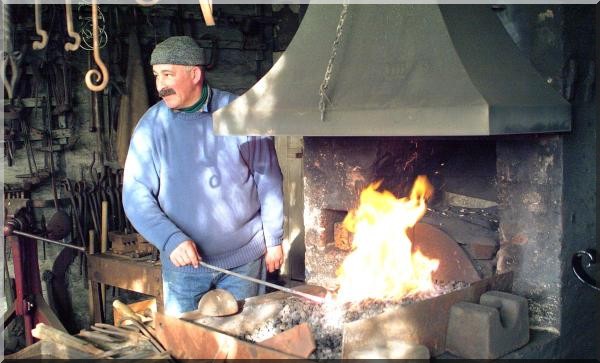
  • backsmithing - student wants to know the history behind working metal, dad was a welder 
  • archery or trapping - students has connections to both and hasn't decided what he wants to do yet 
  • 3 students on traditional food, Norwegian, German etc (milchklosse?) - share and make some very unusual and ancient recipes 
  • 2 students on carving and wood art - grandfathers have made beautiful and interesting pieces 
  • the clothing prep and maskmaking work behind ceremonial dancing - student has Gitxan relatives involved in this tradition, and a grandfather who carves masks 
  • 2 students on breadmaking - one of them is sharing an intricate Portuguese tradition 
  • quilting, garment making - grandmother connections 
  • square dancing - students' grandparents did this every chance they got 
  • spearfishing - I think the student has a plan for this!
  • 3 students who have not figured out a topic yet
What is your favourite heritage skill or activity tied to traditional knowledge?  What's the personal connection?

Friday, October 19, 2012

Mumbleypeg

Got about to some "mumbling of the peg" yesterday and today with some friends and fellow Social Studies teachers at our Pacific Slope Consortium retreat at Purden Lake.

Mumbling the peg, you say? It's a variation on an old game where some folks stand around and flip a pocketknife into a stump using a variety of techniques: off the elbow, off the tip of the thumb, off the top of the head, and so on. Mumbleypeg. In the original game the loser has to pull a peg out the ground with his teeth, but we don't usually get that far. In fact, we didn't even get to the knife-tossing bit this year.

We did however, mumble the peg in the more pedagogic sense. The "socratic circle" version involves revery by the fire combined with no-holds barred conversation on the educational issues that are on our minds. We hold ourselves and ideas open to intense scrutiny, four lakeside inquirists tossing notions up to be deconstructed, laughed at/with, and cheered. Some ideas missed the mark, some landed with grace and perfect balance, others stuck to the mark through fierce rhetoric and chance accuracy. In some ways it was like chucking knives about, but in a softer, "mumbley" way we also were free to trade barbs and challenge each others' thinking because of a large amount of trust and good humour.

Here are sample of the big and small ideas that we set in play and sent to the stump one way or another, midst the feast and fire:
  • teacher mediocrity - can we expect system change when we are often our own worst enemies? What can we do to improve our lot? Failing that, what can we do to step around the dysfunction and do some stuff that is not mediocre?
  • admin mediocrity - is it even reasonable to expect more from our admin? do we actually want the best teachers to become the best admin, like in the olden days? would teacher self-reliance allow admin to focus on more important roles than the mall-cop ones we've made for them? and maybe require less of them? what can we do to model leadership for our leaders?
  • student mediocrity - what are the long term implications of the way our system ignores (and even rewards) poor performance, how can we tastefully let our students know we care and will also hold them to high standards?
  • if you want to send the message that it matters, don't brush off the activity, e.g. the critical thinking value of a research essay and work necessary to get students to take it seriously, being persistent about skills and seeing the content as a way to successively develop skills, importance of an ongoing teacher narrative to explain that to students that this is what is actually happening
  • pros and cons of PD on twitter - some things we've learned, some repetitive jargon-filled stuff we're tired of learning about, laughed at some apparent dorkiness, wondered whether it justified the time invested, compared our district leaders' use of social media and blogs to what we see in other districts
  • technology comedies - looked at recent attempts to coax a dialogue on tech with district decision-makers, agreed that if leaders (of any kind) ignore teacher passion and planning regarding "learning enhanced by technology" they might want to wear bags on their heads when promoting 21st Century Learning and the BC Edplan
  • celebrated the timeless possibilities of low-tech teaching - give us 11x17 paper, some pencils, internet connection, a heated & well-lit room and we'll figure out the rest, if anyone wants to actually talk tech or figure out why smartboards are not all they're cracked up to be, they know where to find us in our hobbit holes
  • grad requirement changes - digested some of the implications for our craft, and cranked up the settings on our respective crap detectors, debated use of letter grades in Gr 8 and 9, imagined alternatives, speculated on what a two-tiered education system would look like
  • deconstructing competencies - what do we actually want our SS students to demonstrate to us? how can we get this without bogus mark-counting and what do we value re skills/processes vs big themes vs content?
  • debunk the effort/learning myth - why do educators still engage in the bizarro debate about "no zeros" assuming that learning is some pure measurable product (deserving a %) and that everything else is behaviour (not deserving a %). The most painful suggestion is that learning = content familiarity or work completion. If Marcy and Liam both work on maps, and Marcy never turns in her map, but Liam does and gets a mark, we are essentially rewarding Liam for good work habits, it may not even matter what he learned from the map. 
  • from effort/learning split to wholistic assessment - how does this change when we base assessment on performance, on what students can actually demonstrate of what they learned? this is obviously not new, but (remarkably) teachers drift away from this far too often, and allow the "just assess the learning" tagline to push student responsibility and skill-buidling off the assessment radar
  • performance based assessment - worked through what a matrix might look like that matched up competencies with focus questions, beyond averaging and assigning percentages, how can we produce an evaluation that students can be real clear about
  • ways of communicating student performance to parents - some old tricks (the folder full of exemplars) and new ones like the video clip of students' binders, which teacher shares with parents, or have student take a pic of an impromptu portfolio (e.g. spread out on desk) showing what they're working on and text it to parents
  • intervention models and "getting kids through" - are we doing more harm than good, shared some models that appear to be working, compared models and asked whether LIF funds were being squandered
  • blended learning and what do we do for the gifted - planted some seeds here, more than that wondered about little ways to build in our own intrinsic rewards because hell will freeze over before we actually get paid to be good at our jobs
  • deconstructing decolonization - what we observe in/from our First Nations students, some challenges to the notion that our FN kids come knowledgeable about their own supposed ways of approaching learning (although they come with many other challenges to overcome), and that we already place a high value on the notion that learning is embedded in memory, history, and story; still, we would like to learn more about how our FN kids can dial in
  • field trip to Vimy Ridge 2017 - light a bit of a fire here to talk about who and how big
Did I miss any?

Friday, October 12, 2012

the forbidden ipad

Recently, I inquired of our school board office staff about the status of support for iPads, Android devices, Nexus tablets and so on. I was curious to know if the school board office had reached a purchasing decision on peripheral and mobile technology other than netbooks and Windows tablet-style computers. This question has been asked in a variety of ways by teachers and administrators, but the decision appears to have been in limbo for two years. The perception is that purchase of iPad-like devices by schools and PACs have been forbidden by the school board office, although no one can actually confirm this, just a long list of denied project proposals without explanation. The question has been put to school administration and tech committees, district senior administration, tech support, purchasing department, and trustees. Each person has referred the question on to the next, like a big circle, with no definitive response. Yes, no, only if, etc. are all acceptable responses (with differing consequences), but educators looking for support in their use of mobile technology need to know one way or another.

Currently, my principal, other teachers and I are looking at what role mobile technology might generally play in our Library or Learning Commons, and a proposed blended learning project in particular. We'd like to know what our options are before making too many plans. In our district, the school's learning resources and technology requests are often subject to district purchasing restrictions. For example, the school board office has a purchase agreement for Dell computers and laptops, and a requirement to install these with a Windows OS. They have no such restriction on mobile devices, have never sought a policy or discussion on these, and thus a variety of tech projects and pilots have been stalled. It is truly remarkable that we are having a "Learning Commons" conversation at our school between the principal, teacher-librarian, teachers, and students. The climate for this kind of conversation has been toxic for a few years, so I am very encouraged that is is happening at all. It was triggered by a discussion about how technology can serve the vision, and this collaboration will fizzle if the board office won't commit to their end of the conversation.

Why is this even a question? Around 2010-11 at least eight schools looked into getting small groups of tablets for pilot learning projects (4 highs schools, 4 elementary schools; 5 of the requests came from teachers, 2 from a principal, and 1 from a VP). For example, at my school we requested five iPads for use by Social Studies and SLR (special education) students. All of these requests were made with the intention of working compatably within the single-platform Windows PC environment, and some were cost-savings proposals as alternatives to lab replacements. Each of them represented the true commodity in educational technology, not the tool or device, but the educator with passion and a plan for exploring new ways to engage learners. At the time, there was some doubt as to whether the school district would support one kind of tablet or another, ban all tablet purchases, or "wait and see." We were all left guessing it was the latter, as all of the proposals were turned down with little or no explanation, not even anyone willing to say where the decision came from. I wonder if the storm of the "district sustainability" cutbacks in 2010 left some gaps in policy and technology leadership that are only now becoming clear. Perhaps now that the dust has settled we are ready to continue some unfinished conversations.

Like many teachers, I have projects and practices in mind that include the use of tablets, even sources of funding available (school or external, like PAC), but am not eager to make deep plans if tablet purchase is unexpectedly blocked. For example, a current course proposal that involves a new use of our Learning Commons would see our school purchase a small group of tablets for student use. If these tablets are simple e-readers, the planned activities need to be scaled down if not eliminated. If the tablets are full-function Android devices, iPads, etc., then the activities will look different, more creative and integrated for example, and will begin rather than end with reading. If the school district wants to support this kind of learning empowered by technology, it needs to demonstrate the "can-do" attitude by removing barriers to innovation. If the school district does not want to approve school purchases related to pilots with mobile technology, please just say so -- it frees us up to develop independent plans that do not require support, or we can go "old school" and skip the tech. Yes or no -- both have logical arguments in their favour, but we do need some kind of response in order to plan with certainty.

The uses of pads and tablets in education are overwhelming, and well documented & promoted in other BC schools and districts. When (former) education minister Abbott spoke of "learning empowered by technology," he turned to examples of iPad pilots in districts that have a deliberate strategy for the use of mobile technology. While many debate whether pads or tablets should be used 1-1, in small groups, dedicated to classes, or available for sign-out, etc., I have never encountered a jurisdiction (outside our own) with an actual purchase ban. This strikes me as a significant irony given the local and provincial push for 21st century learning. Here are a few examples of the educational uses of iPads and similar tablets:
With our district's reticence to engage in this dialogue, our organization has fallen behind on many innovative technology practices (as individual classes and schools the picture is somewhat different). Our district has certainly not discouraged students and teachers from using mobile technology, but it has not provided any support for us to do so other than offering limited public wireless at most sites. We need a blended tech approach where the school district provides core learning resources and technology (as it has always done) which can then be complimented by what students and free technology are able to provide. Our schools have, in fact, been encouraging more use of "BYOD" (bring your own device) but this has a few unresolved problems:
  • many students can't afford a tablet such as an ipad or nexus
  • the student public wireless networks have many restrictions (e.g. no printing, blocked apps), slow speeds, and no full-functioning network is available to teachers
  • planned activities are limited by what devices (and apps) students come with on a given day -- restricts ability to plan for the devices to be used in a lesson
  • the district has lost (e.g. TLITE) or closed off avenues for technology capacity-building (e.g. district tech coordinator teacher or administrator)
  • teachers need access to a few devices for "sandbox" experimentation, teaching & students activities, and modeling appropriate use for students
  • mobile devices are seen as cheaper alternative to full computer lab purchase but this goal cannot be realized without some level of device purchase by schools
If teachers and students do not have regular, dependable access to a pod of tablets, this lauded technology will simply not materialize beyond random and spontaneous use. It's like describing how to play chess but not being able to play because the students only bring half the pieces, and the teacher isn't allowed to purchase a chessboard. The result is that teachers spend less time thinking about how to include mobile technology in their plans for student learning. As Chris Kennedy (superintendent SD45) puts it: "simply encouraging students to bring their own devices is not enough, or an effective strategy. The strategy must be purposeful, supported and unified for both teachers and students. Failure to do this will leave us with pockets of innovation, and without a sustainable model." retrieved from Culture of Yes Oct 11/2012.

Normally, decisions about peripheral devices for which the district does not have a purchase agreement would be left up to schools (e.g. principals or tech committees) to decide. Other than costs, which school principals can weigh against other priorities or mitigate by choosing tablets over desktop computers, the decision can be made with impunity. What we stand to gain is support for passionate pedagogy, dynamic use of technology for learning, affirmation of decentralized decision-making, and the potential for diverse innovation and exemplars at many sites. If the school board office favours a district-wide decision, we need a list of supported devices from purchasing, including at least one or two high functioning tablets such as the iPad, and preferably accompanied with an effective strategy. It is important to talk with a few teachers first, the ones that will actually be designing the learning empowered by technology.

Why would this question be difficult to answer? The April 27th 2010 board decision on moving to support only single-platform Windows PC computers clouded the topic somewhat, as tablets (like the iPad) were made by non-Windows vendors and tend to be lumped together with computers. It was not the stated intention of the board or board office at the time to ban all peripherals by non-Windows vendors; the decision was directly related to cost savings for computer support -- e.g. Macs were purported to be more expensive to purchase and maintain. Touch-tablets, pads, and e-readers are not much different than document cameras, smartboards, digital projectors, or the current generation of photocopiers. They have chips, internet connections, software, work with a Windows PC, etc. but these "computers" are locked down as far as potential to infect networks or get hacked by students. They do not require the same kind of tech support or security protocols as computers. They do not require purchased OS or software suite upgrades, do not require a repair dep't to keep a parts inventory, and do not require technologist-designed "image" updates. In other words, figuring out what to do about ipads or android devices might be a money decision, but it is a separate decision from the one that involved platform support. Our board office has been playing sophisticated shell games around this issue and it only adds to the layers of frustration faced by principals and teachers. The most familiar version of the game is to use the 2010 single-platform decision to apply to new areas that weren't even up for debate at the time.

Further clouding the issue is that the school district has no tech plan, hasn't since 2005, even though one was committed to by the committee chair, superintendent, and tech support coordinator at the April 2010 board Management & Finance meeting ("we don't make important decisions without a plan, a plan will be forthcoming"), and again at the April 28th 2010 board meeting, both of which I attended.  The final wording called for a plan that "provides a means to continue to enhance the ability of district schools to adapt technology for improving student learning" It was supposed to be "adopt" not "adapt," which has a slightly different connotation, but that got lost in the motion revisions. I know this because I suggested the motion wording to begin with, and did so in anticipation of time (like now?) when the school board office would back away from educational technology leadership while still controlling financial decisions related to technology. I guess that particular chess move was a pyrrhic victory, amusing no one but myself. Two and a half years later there is still no plan, and it is unsure even by principals as to who decides on whether tablets can be purchased, just as it is not clear who to talk to about technology issues. This situation appears to by unique in our province. Every other contact I talked or tweeted to (perhaps a quarter of the 60 districts in BC) had no such restrictions on mobile devices or lacked a basic tech plan. Most have active plans for innovation led by either a principal or head teacher. Similarly, I have not heard of administrators (though perhaps teachers) in any other district trying to support learning with a costed, justified technology pilot get turned down because they picked the wrong vendor. When this happens often enough, eventually the technology leaders stop asking, or stop leading.

This confusion indicates that the technology vision has been obscured in our district at the exact time at which we should be continuing the momentum and leveraging the capacity built up from the late 1990s until the mid 2000s. The district tech team, tech for learning leadership group, tech coaches program, district tech coordinator position, QLG consortium, tech standards working group, key tech contacts positions and assemblies, tech fairs, and the ongoing workshop offerings by and for dozens of teachers have all disappeared, not to mention an actual tech plan. For a variety of reasons these fell off the rails (blogged about this before), and now the most innovative thing we can look at the district level is promotion of smartboards, clickers, Moodle, and cumbersome videoconferencing -- 8-12 year old technology that most jurisdictions have already left behind or include as just a small part of a strategy to support innovative teaching & learning.

I think we reached a crossroads 5-7 years ago, perhaps more recently, when leaders in the district realized we faced exponential growth in the demand for new technologies and improved infrastructure, growing lists of hardware and software wish-lists, rapidly developing skill-sets, new paradigms for the role of technology, and yet many teachers, principals, and students who had yet to cross the digital divide. I imagine the conversation came down to one of sustainability, and the path taken was to hit the kill switch on the most expensive aspects of technology support in the district -- the various teams (lots of release time, district equipment), dual platform (tech support time, allows bulk purchase of low-end units), and leadership (salaried position, secondments, release time, etc.). Unfortunately, while no doubt saving some money, taking this fork in the road has also sent a chill through innovative practice, allowed some serious stagnation in regards to uptake of basic skill-sets by staff and students, and reduced planning, coordination, and communication at the school and district level. Additionally, whatever decisions took place at this cross-roads were not well communicated to teachers and to some extent principals and trustees.

The "simplicity" notion behind single-platform support (reduce system complexity, ability to deploy new uses of ed tech and training across a homogenous group of units and users) might have some currency if the means of "deployment" wasn't gutted at the same time (e.g. no one left to champion the ed tech at the district level). Needless to say many teachers are confused or have had their passions deflated in the last few years and have given up looking for district support to pursue profound goals related to educational technology. In some ways this is a natural evolution in a rapidly changing milieu for technology. The joys of teaching and learning continue with or without a centralized vision (and with or without technology), the outllook is more global and teachers have become more self-sufficient, seeking interdependence with fewer strings attached -- a functioning anarchy of sorts. But is important to note what we lost in this process, such as the capacity for educators to learn together in a way that impact school district culture (something we had from the late 1990s until about about 7 years ago).  We also appear to have lost the ability to consult on decisions as basic as how to respond to a principal or teacher's request for support on a technology project.

Mobile devices are an important "wedge innovation" or "disruptive technology," as they spin off into so many other interesting practices -- anywhere/anytime learning, online course design and access, video podcasting, new research techniques, paperless class communication, smartboard/internet in one's hand, instant rich media consumption and construction, diverse ways of sharing and connecting... the list is long. If teachers are to embrace "21st Century Learning" we need to enable use of wedge devices accompanied with some coordinated teacher education. Today the question is about pads, but next year it may be about a new technology gadget. The tool is not the issue, it is the culture of support that exists around technology. My present inquiry is as much a litmus test of this culture as it is about the tool -- I can use something else to achieve similar results, our Learning Commons will survive without mobile technology, and students will be just fine without access to gadgets. The important lesson is that a formal dialogue and process for both engaging teacher passion and deciding on what technologies will be supported is necessary to progress from the status quo, our current state of withdrawal by technology leaders in the school district. We can learn how to do this from other school districts in BC -- they reached the same crossroads we were at 5-7 years ago and decided to press through the challenges by supporting constant dialogue, innovation (in both practice and purchase priorities), and celebration of quality teaching and student learning empowered by technology.

A positive note is that students and teachers continue to use a vast array of technology for learning, including "wedge devices," but it is largely self-taught, self-directed, self-promoted, and often self-funded. In short, we've had to go underground. This trend, at odds with the concept of fully-funded public education, nonetheless shows self-sufficiency and ingenuity. Another positive note is that free yet effective technology has filled many of the gaps -- social media, screencasting, cloud services, streaming video, browser-based apps, skype, etc. By extension, sustainability with technology does not have to be as much about money as it does about learning attitude, professional development, and student achievement goals. And of course, we've found that high-tech doesn't always do a better job for teaching and learning. The "digital natives" are not impressed simply because it is digital; there are many other factors that drive successful pedagogy and many time-tested techniques that teachers rediscover every year. Finally it is a positive sliver lining that, despite what has happened in the last few years, the paradigms change quickly enough that it is almost always possible to simply make a new start and evaluate the next course of action based on current and/or expected needs. The opportunity to embrace a progressive and learning-focused stance on mobile devices stands before us. That's the small opportunity; the bigger goal should be to model a functional, inclusive, communicative, and informed district-wide relationship on educational technology.

I have local case studies and a decade of notes to illustrate most of the points made above if anyone would like to debate or discuss what I've written -- please tweet, email, or leave a comment.

Saturday, October 06, 2012

open letter on professional development

To the staff at D.P. Todd:

Thank-you for accepting me in the voluntary position of Professional Development (PD) Representative for the 2012-2013 year. I filled this position previously from 2005-2010, and was part of the school’s PD committee (when we had one) from 2003-2009. I should also point out that I currently serve on the PGDTA PD Committee, which is tasked with oversight of the PD Fund and facilitating PD events in the district on behalf of teachers.

My own understanding and relationship with PD has changed over the years. For about 8 of my first 12 years as a teacher I think I participated, hosted, organized, or facilitated a school-based or district-based workshop or PD event on almost every PD day, much of that related to educational technology. During the last 5 years I have tried to work with different groups of teachers and educationists while backing away from formal school and district based offerings, excepting the Zone Conference. This is, in large part, because many of the technology topics I once championed have become old habit or usurped by excellent online resources. It is also because of the phenomenal growth of informal PD, much of it spurred by social media and the interactive web. Finally, this shift is, in smaller part, because I find many of the PD offerings for school staffs expect some kind of groupthink as a key part of the process, and often seem more like time-fillers than something useful. This is why I was so eager to run PD in the past -- so that I couldn't complain if it was stodgy. Most of the other topics in which I am personally interested (e.g. heritage inquiry, performance-based assessment, or identity-based curriculum ecology) seldom generate a large audience, so I find myself not so much the joiner or leader that I might have been from 2000-2008.

That’s all past and present. The future is yet to be written, so I am keen to see how PD changes in the coming years and how our staff, as individuals or groups, take on meaningful projects or ideas to better their teaching practice and work with students. I would like to describe what I see as my responsibilities for this position, all of which are open to your feedback.
  1. This position is a voluntary PGDTA role, working alongside our Staff Rep (BCTF union representative) to ensure that high quality, contractually sound, teacher-directed professional development is understood by staff and administration and promoted within the school.
  2. The PD rep has a simple yet important task of communicating various PD opportunities that exist in the school, district, province, and online. I will use some conventional means of communication, such as our 57Online ystem, and also social media to promote PD, including the use of twitter hashtags #sd57 and/or #dpts for dialogue on local PD.
  3. I am not a PD planner for the staff, someone who will coordinate PD activities, or bring donuts on NIDs. The fact that PD has been defended so rigorously as an issue of teacher autonomy means that teachers should not be eager for anyone to plan out their PD for them. The PD rep is not the same as a PD committee chair or School PD plan writer, although these roles have sometimes been combined in the past.
  4. I am more interested in the ongoing PD that takes place throughout the year and not fixated on the five PD days for which most teachers already have (or should have) an active plan. I believe most teachers have come to understand that PD is a regular extension of their practice, and not just something for the five precious PD days.
  5. I am excited to work with staff that want help developing their PD plans, want to know more about how PD can shape their practice, or willingly invite participation or accountability in their professional growth. I won’t monitor staff PD activities or try to justify eccentric choices by others, although I will give feedback and offer dialogue from a variety of perspectives, including a BCTF point of view.
  6. I will advocate at every level for the foundations on which dynamic PD is built, the autonomy necessary for teachers to actually step beyond requirements or expectations and pursue PD that engages their passions and needs, and high standards for PD to at least allow excellence and creativity in the door. I will see no irony in modeling both self reliance and mutual accountability.


Further thoughts (from my Professional Growth Plan)

What is my understanding of Professional Development (PD)?

One of the neat things about being a teacher is the chance to be deliberately engaged in life-long learning. This happens during the work day, on my own time, on non-instructional days, and in summer. Personal and professional learning are part of an “ecology,” a connected cycle of theory-making, reflective practice, and action-research. This “pro-d” or PD takes many forms for me:
  • conducting research and reflecting on how, what, and why students learn, and understanding the educational landscape in which this takes place 
  • learning more about my subject area as I plan for lessons, read and write on topics like democracy, citizenship, environment, sustainability, and history, and focus on what students do/can’t do/could do/should do 
  • participating with other educators in collaborative discussions and projects on topics like heritage research, identity & inquiry, analyzing trends in current events, authentic balanced practice, critical thinking, meaningful assessment, and educational technology 
  • independent study, course design, textbook review/writing, advocacy for public education, and follow-up on all the powerful questions raised by colleagues and students. 
My classroom is about student learning and student achievement, as is the planning, instruction, assessment, and humanity I put into my time as a teacher. Reflecting on my professional development is a step back (or a pause, at least), centered on what I am up to, but it is ultimately about the same thing... the social, intellectual, cultural growth of the students I meet. Regardless of the theme or focus, PD is ultimately about what I am learning, and what others are learning around me.

There is a special role in my reflection (and thus this document) for interrogating the structures that accompany public education, for celebrating the emergence (in any form or context) of cultural attributes that signal a new attitude towards community development, environmental sustainability, total cost economies, and perhaps some other “cultural” values that reckon with my own. The BC public education system is rife with dysfunctional structures, shallow thinking, and misunderstood paradigms, but it is also filled with creative ideas, caring educators, curious students, and committed parents who are making moves towards new cultures of being that are good for people and the planet. When we see formal learning as a relationship between real people in community, more like a guild and less like a factory, the bizarre eduspeak and various social and political agendas attending our system can be broken down and allowed to find their appropriate place. A central irony in my practice is that I seek some form of disruption, not unlike the calls for education reform from our own government, and yet the approach reformers take is almost always at odds with both my way of thinking and what I believe to be sound politics, discourse, and progress. I suppose I am fated to dwell midst the irony, and do so as a polemic loner.

I have also come to realize that in order to remain caring, hopeful, and optimistic as an educator, I have to own my trajectory and work towards my dreams with or without the support or understanding of structures and people around me, while at the same time working to improve the structures and listen to others. This hit home for me while listening to Stephen Lewis’ eulogy for Jack Layton. The basic idea that caring public service starts with a desire for fairness and mutual aid is a deep conviction and compelling goal.

What are some of my primary PD goals and interests as an educator?

My work with students and educators focuses on the emergent identity of learners, the social, geographical, metaphoric, and curricular lenses by which this can be examined, and an assessment of the transformative experiential and technological tools by which this emergence can be realized. In short, I’m interested in contexts.

While modern Canadian History and is compelling and occupies most of the curriculum within my teaching assignment, I have a particular interest in regional British Columbia history and geography, and Canadian immigration stories from the 18th to early 20th century. My approach to all subjects is to engage student and educator identity (a product of both heritage and culture) in the exploration of significant and useful learning. This is supported with a reliance on authentic inquiry and assessment. One example of the boundary between my interests and the work I ask of students is the use of project-based learning in the area of heritage research, a combination of critical thinking and personal reconstruction of history through interviews and analysis of personal sources and modalities.

Underpinning my beliefs and values is a notion that a new culture is needed in our society, one that can be (should be) influenced by what happens in my classroom -- a culture of active citizens pursuing creative, intelligent, and connected pathways towards a sustainable future; grounded individuals who challenge the dominant culture on issues of relevance and who seek out new ways for values of community, heritage, and ecologically resilient adaptations to emerge.

What are some of the educational values that inform my teaching practice and my personal and professional growth?
  • fair and reasonable assessment, a key part of a just practice 
  • balance of skills, knowledge, habits, means (process/path), and ends (outcome/goal) 
  • strong orientation towards development of student identity and narrative self-inquiry 
  • building self-governance, self-reliance, and responsibility in students 
  • building community without coercion, seeking interdependence not dependence 
  • rigorous learning related to relevant and meaningful learning outcomes 
  • respect for simple and direct student inquiry and constructivist learning 
  • strategic, thoughtful, narrational, and transformative use of digital technology 
  • creativity and diversity (multiple modes of seeing, knowing, expressing) 
  • learning that is embodied, holistic, and well-rounded 
  • curriculum design that looks for connections to citizenship and environmental sustainability 
  • work-life balance, importance of student and teacher personal time 
What are some criteria I use to determine whether to join in a PD offering?
  • event appeals to at least some of the values expressed above 
  • event is the result of an open, intelligent, and inclusive process of planning 
  • planning addresses a thoughtful question, relevant issue, or obvious need in the wider context(s) of my teaching practice
  • the topics are fresh, applicable, and somewhat original (I don’t want to repeat the same idea over and over unless I have some new role to play as a participant) 
  • I won’t feel dumbed down, talked down to, or subjected to rudimentary skills, ideas, or practices 
  • pro-d allows for a stress-free and learning-focused application of teacher contract considerations (peaceful, practical, related to what I teach)

Tuesday, October 02, 2012

Benchmarks of Geographic Thinking

My sister planting trees in the Bowron Clearcut, 1986. Many geographic relationships and themes overlap in this image

In what seems to be a regular occurrence, a Social Studies colleague from Ft. St. James has challenged me with some powerful questions. This time it is about what is at the heart of geography education, something she is working through with her students. She likes to set the bar high; not just content to teach curriculum and provide a friendly learning atmosphere (which is as high as I reach on most days), she want her students to really get somewhere, to express and invest and stretch their thinking. Adapting the questions a bit, here is what I'd like to know more about:

When students encounter a geographic issue or phenomenon, what guiding themes or inspirations will help them make sense of of it? What themes, skills, or approaches are of most use for engaging students in geographic problem-solving?

Please leave a comment or email/tweet if you have ideas to add to this. I will edit the post as ideas arrive. I suppose one place to start is with some existing standards to apply to thinking and inquiry in Social Studies:

Benchmarks of Historical Thinking (Seixas)
ref: http://www.histori.ca/benchmarks/
  • Establish Historical Significance 
  • Use Primary Source Evidence 
  • Identify Continuity and Change (Patterns of Change) 
  • Analyze Cause and Consequence 
  • Take Historical Perspectives 
  • Understand Moral Dimensions of History (Judgement) 
Benchmarks (American Historical Assoc.)
ref: http://www.historians.org/teaching/policy/benchmarks.htm
  • Analysis of primary and secondary sources 
  • Understanding of historical debate and controversy 
  • Historiography/how historians develop interpretations 
  • Analysis of how historians use evidence 
  • Understanding of bias and points of view 
  • Formulations of questions and determining their importance 
  • Determination of the significance of historical change 
  • Examination of how causation relates to continuity and change 
  • Interrelationship among themes, regions, periodization 
  • Perceiving the past through values of the past 
Five Themes of Geography
ref: http://www.nationalgeographic.com/resources/ngo/education/themes.html
  • Location 
  • Place 
  • Human-Environment Interaction 
  • Movement 
  • Region 
Six Elements of Geography (American Association Geog National Standards)
ref: http://edmall.gsfc.nasa.gov/inv99Project.Site/Pages/geo.stand.html
  • The World in Spatial Terms 
  • Places and Regions 
  • Physical Systems 
  • Human Systems 
  • Environment and Society 
  • The Uses of Geography 
Benchmarks exist in other disciplines, too
Science 9-12 Content Benchmarks (compiled from various American sources)
e.g., ref: http://www.nmnaturalhistory.org/BEG/BEG_Standards_Science_Part1.html
  • Use scientific method to investigate and gather/analyze evidence 
  • Understand that scientific processes produce evolving knowledge 
  • Use appropriate math to solve problems 
  • Understand properties, structures, and reactions of matter 
  • Understand role of biodiversity and genetics in nature 
  • Understand earth systems, origins, and interactions of the spheres 
  • Understand energy and how it interacts with matter 
  • Understand the motion of objects and waves, and the forces that cause them 
So, what might benchmarks for critical thinking look like in geographic education?
Geographic Inquiry (my synthesis):
  • Structure of place - form & function of human and/or physical systems 
  • Use of Evidence - human and physical features, selection & interpretation of phenomenon 
  • Causality and Change - evolution of systems, function of space & time 
  • Human-Environment Interaction - mutual impacts and dependencies, modes of adaptation 
  • Multi-Disciplinary Perspectives - role of history, sociology, biology, economics, geology, etc. 
  • Responsibility and Sustainability - resource ethics, connected issues, planning & management
What are they for? I think themes guide inquiry in the same way that principles guide decisions or values guide behaviour. They don't always look the same, depend on the individual perhaps, nor are they consistently applied (My "principle" says eat local, eat organic, and yet I just ate a Big Mac). The themes or benchmarks can be studied, challenged, adapted, and can remain present as reminders that just thinking about what we observe isn't enough, we need to put internal (identity connections) and external (scholarly approaches) on the line and be prepared to be stretched in order for deep learning to take place. That's the big challenge. The 5 themes of geography has been around for along time, by themselves they don't make geography fun. A friend of mine recently had his Social Studies 10 class explore the PGSS school and grounds with cameras to locate evidence of the 5 themes in play. They shared their photo observations together and spent some time explaining connections to the 5 themes, defending photo choices, and discussing the use of space at their school. Critical thinking (using themes and benchmarks), engaged identity (their choices, their photos), smart use of technology, physically active/hands-on, focus on "how to think and learn" built on top of the "what," multiple roles for teacher... great lesson, eh?

What is the intended outcome of the use of themes or benchmarks? Sometimes in Geography we construct "geographies." (srsly!). We move from the general (the skills and processes and observations), to the personal (the reconstruction of what is happening in a specific landscape), filtered through the knowledge and agenda of the individual geographer. In other words, "Geography" (as a subject) is the study of place, an analysis of physical and/or cultural characteristics related to a phenomenon or location.  A "geography" (as an inquiry) is a construction of significance -- what is happening in a particular place, often related to an issue (e.g. environmental crisis in a watershed, changing climate as it relates to forestry, a town recovering from a recession, etc.). The "Study of Geography" is the set of lenses we develop with out students -- what's going on here, what are the relevant terms and underlying factors that help make sense of this landscape or phenomenon or issue.  The "building of geographies" is the application of these skills, attended to by the themes and benchmarks that ensure rigorous thinking. The hinge, the key piece that links skills, knowledge, and ability to analyze case studies, is the role of identity and the "topophilia" or the deep connections to place that guide so many of our conscious and unconscious understandings of geographic phenomenon and experiences. Occasionally, students connect to different parts of my geography 12 course because they simply find the material interesting or I've put on a great lesson. Sometimes their engagement depends on a cool project they design and do. More often, though, it is when the material (or lessons) and their response (e.g. project) resonate with some deep need they have to "become" -- they want to make connections between issues, places, ideas, patterns of thought and their own bodies. Learning, especially in the K-12 scene, is as much about becoming as it is about what one ends of knowing. It is for this reason I've abandoned most written or powerpoint project options in Geography and encourage more "Embodied Geography" from students (e.g. see Poutine Glaciation or Waffle Tectonics).

Here are some examples of "geographies" that combine observation with different degrees of bias (identity can't be engaged without also evoking agendas) and the use of standard reference points (e.g. derived from benchmarks or fitting into themes):

This list could be endless -- any careful deconstruction of a set of relationships happening in a particular space and time (sometimes applicable to the larger world, sometime not), and careful reconstruction of what it all means and where we might go with what we learn -- this is a geography. It is the rich boundary-zone between benchmarks of geographic thinking, relevant cases studies, and the passion emerging from students' ongoing identity work. It is also the place where students can get fires up about  issues and begin to understand how direct experience, power, agency, consciousness, and intimacy are all at play in landscapes, just as they are in their lives. Building a "geography" is both a phenomenological and ontological effort. Don't worry, I don't punish kids with those words, not unless they ask, anyways. We do talk about topophilia, though.

I think one of the best things to do with a Geography class is be to build geographies and then find a physical way (something built or something performed) to express them, ideally for the whole class so we can follow their thinking and ask lots of questions.

Monday, September 24, 2012

grad requirements dialogue

I have been invited to participate in a discussion about changes to high school graduation requirements in BC. Maybe some of you who arrive here are doing this, too? While I don't pretend to represent anyone but my own quirky self, I am open to carrying other people's ideas and suggestions with me into the Oct. 11 meeting. Feel free to email me (gthielmann at sd57.bc.ca), tweet, or leave a comment below if you'd like to add input. I'll also check to see if the Ministry of Education is taking written submissions on this topic beyond the BCEd Plan form at http://engage.bcedplan.ca/2012/05/question-18-creating-a-new-graduation-program/. (yes, they are... see comment from "spacely" below).  Ministry presentation on grad requirements dialogue: http://www.sd27.bc.ca/images/DistrictPublications/2012%20Regional%20GRAD%20Consultations-Powerpoint.pdf.

Here's the session intro and discussion questions:

"You are invited to join (students, parents, educators, employers, post secondary partners, civic leaders and others) in a conversation that will help inform the development of future graduation requirements.

The Ministry of Education is seeking input from around the Province to develop recommendations for new graduation requirements. This session is one of many being held this Fall.

There will be facilitated group discussions focused on getting feedback to five key questions: 


Question #1:
What do you think are the core or essential things all students should know, understand and be able to do by the time they leave secondary school?

Question #2:
Beyond the core, how could pathways for choice or exploration be provided?

Question #3:
Research is underway with a focus on the following five cross-curricular competencies:
a) Communication

b) Critical Thinking
c) Creative Thinking and Innovation
d) Personal Responsibility and Well Being
e)  Social Responsibility

How do you think students could demonstrate these competencies?

Question #4:
How could student learning be communicated to:
a) Students 
b) Parents/Guardians 
c) Post secondary Institutions/Employers

Question #5:
How would you design an awards program to recognize student success in a personalized learning environment?

We look forward to having you join this dialogue and helping to inform the development of future graduation requirements."

Sunday, September 16, 2012

Language and Landscape Project


A few months ago, I broached the subject of a "Middle Earth" course at http://thielmann.blogspot.ca/2012/04/middle-earth-11-rough-course-proposal.html.

While I have an educational and teaching background in both English and Geography, it did not occur to me until recently that an interesting combination of these two disciplines would be possible. I think the milieu for curricular experiments has opened up (or come around again), and with support for "project exploration" from students, teachers, and administration, I'd like to offer a course next year at my school (D.P. Todd) that blends BC's English 11 and Geography 12 and takes place in two blocks during one semester.  The course will address all corresponding PLOs and a "hook" to the course will involve literary and geographical examples drawn from Tolkien's Middle Earth, albeit as a point of departure rather than a destination.

A special dimension to this course offering is the blended learning delivery model.  One of the two blocks for which the students sign up will look much like a traditional classroom with expectations for regular attendance, direct instruction from the teacher, and so on.  The second block will be "flipped" -- this is project-based learning time, tutorial, independent work, seminar and small group sessions for the teacher and students.  In designing a course this way I am attempting to respond, interpret, and interrogate the BCEd Plan and "personalized learning" in a way that makes sense to me, our students, and our school.  At a practical level, it allows students create some personal designs around their own learning without losing the guidance offered from a well-planned program of study and a committed teacher they interact with daily.

I would like to involve others with some of the early planning and feedback, as this course offering will affect the 2013-2014 teaching timetable for our school and will not look the same as a regular course. I would like to see the work my students and I do as part of the continuum of language, literacy, and communication goals that are common within the English and Social Studies department at my school.

The course will be a "program" in the sense of how our "Socials 90 program" at D.P. Todd combines two courses and requires some special commitments. This project is tentatively titled Language & Landscape 11. As a new offering, it may simply be a double-registration in English 11 and Geography 12, although we are open to this being a pilot program and containing a unique stand-alone Gr. 12 credit (board-authorized). Sorting this out is part of the "project exploration" to ensure access, quality, and funding consistent with other courses and programs.

For more detailed information, please follow the project as it develops at http://dpts.sd57.bc.ca/~gthielmann/LL11. I've attempted to anticipate and address a range of inquiries that are likely to be on the minds of stakeholders in a project like this.

If you are interested, please let me know what you think in person, by email, twitter, or a comment below, preferably some time in the next month. I covet your feedback and opportunities to collaborate on this project. Specifically, I would appreciate links and suggestions for blended delivery, crossovers lesson topics between English/Language Arts and Geography/Environmental education, and PBL ideas that make sense in the tradition of Middle Earth studies and both academic disciplines. I've got my own ideas on to make a go of this, but I also know that others would like to contribute. General comments, warnings, laughs, and questions are welcome too!