Showing posts with label peace. Show all posts

Thursday, November 10, 2016

Casualties of Ideology - Remembrance Day 2016

Coming from a culturally Mennonite background, with its attendant beliefs about non-conformity, non-resistance, and avoidance of military service, there are no war heroes in my family tree. There are, however, too many stories of war survival, of heroic sacrifices and struggles in the face of abject terror, poverty, and prejudice. This photo shows my grandpa Johann Heinrich Enns who served in the Russian Forestry and Non-combatant Medical Service during WWI. As a conscientious objector, this was the alternative duty afforded to German-speaking Mennonite colonists who refused to bear arms against other human beings. The 1917 Bolshevik Revolution ended the war and sent my grandfather home to his family in Neu-Samara, Central Russia (southwest of the Ural Mountains, near the city of Orenburg). It was then that the real terror began for the Mennonites (and almost everyone else) in Russia. The struggle for control of Russia meant frequent thieving raids from the Red Army (and sometimes White Army), wanton murder and molestation from gangs of bandits. In particular, Mennonites who took up arms against the revolutionaries or resisted collectivization were special targets of retribution -- to Russian peasants, communists, anarchists, and other revolutionaries, the Mennonites were wealthy kulaks who were complicit in the class struggle and economic inequality of Tsarist Russia. During and after this Civil War, the Mennonites faced starvation, drought and crop failure, outbreaks of typhus, cholera, and malaria. The reality for my almost all my direct "Russian Mennonite" ancestors was a simple life, religious devotion, and relative poverty leading up to the Great War, followed by severe poverty and premature death for all who remained in the Soviet Union.

In the midst of this chaos, my grandfather married my grandmother Anna Loewen in 1921; their first home was a sod house with a dirt floor on her father's farm. The first two children born to them on the cold Russian Steppe lived 18 months and 6 months respectively before succumbing to typhus and pneumonia. In the growing national fear and acts of state-sponsored terror against all who opposed communism (or held land, or spoke German, or withheld crops, or even their wives and children), many Russian Mennonites fled to Canada. My grandparents left in 1925, not long before this exodus became impossible. They arrived in Quebec on the SS Minnedosa, and "must have looked like a real show piece standing there on the dock in their plain dress with 'Schemadaun' in hand, not knowing a single word of English between them."* By the time they had established a farm of their own in southern Saskatchewan, they managed to get one good crop yield in 1928 before the Great Depression made life difficult once more. Still, they raised 10 children in the Canadian prairies and never saw the ravages of war up close again.

Not so for the other members of Johann's family.  His brothers and brothers-in-law and their families were not able to leave Russia during the 1920s, and thus remained to endure Stalin's collectivization, purges, and state-induced famine. As formerly productive farmers, the Mennonite "kulaks" of my grandfather's colony in central Russia were again made the target of negative attention by the communist government.  They were German-speaking, so during in the wake of Stalin's second Five Year Plan (1933-1937), and again when Nazi Germany invaded Russia in 1941, many of the Mennonite men (including most of my grandfather's immediate family) were rounded up and sent to the gulag, tortured, and killed. Most of this information was unknown to my grandfather in Canada and has only come to light through research by my aunt. The witnesses to these "war crimes" were too afraid to tell their stories until the 1980s.

War and service means different things to different people. For my, grandfather, during WWI, it meant hard work in the forests at Tossna near Petersburg, followed by two decades of hardships. I knew him as a happy, gentle man, and realize that he had it pretty good, including a long life, compared to others in his family and others who lived and served in 20th century conflicts or met their fate because of them.

So, this Remembrance Day I remember my grandfather's brothers and brothers-in-law who were casualties to Stalinist ideology and bloodlust.  At least six of eight died at the gulag in Orenburg. These are my mother's uncles, whose crime was that their ancestors were from German-speaking countries and that they were once productive land-owning farmers:
  • Johann Bergman, born 1893, died in prison 1942. His daughter, studying to be doctor, endured incredible suffering during the Siege of Leningrad in 1942; her husband and daughter starved to death)
  • Isaak Penner, born 1879, arrested by NKVD and presumed to have died in prison 1939
  • Bernhardt Neufeld, b? d?, did not accompany members of his family who left Russia for Germany in the 1920s, possibly killed during Civil War
  • Peter Bergmann, born 1890, "ruthlessly taken from his home, falsely arrested and imprisoned, and then shot by the communists" in 1943 
  • Heinrich Enns, born c. 1902, "falsely arrested by the NKVD and imprisoned, then shot on November 4, 1942"
  • Kornelius Klassen, born c. 1900, arrested in 1942, died in prison. His wife Justina (my grandfather's youngest sister) died in forced labour camp in Kazakhstan
  • Peter Enns, born 1905, who, with his brothers, was "taken to the Ural River on Nov 4, 1942, 'with hands tied behind their back with barbed wire.' The prisoners were tortured, cold water poured over their heads before they were shot. Their bodies were rolled into a grave beside the river. The next spring, the waters rose and the bodies came to the surface."
  • Aron Enns, born 1906, suffered the same fate as his brothers Peter and Heinrich in 1942
------------------
*This post is modified from a similar version posted in 2013. I have included new information from a 2016 publication, The Aron Enns Family History and Genealogy by my aunt Susan Suderman -- all quotes, and the photo are from this book. Further information came from her earlier volume on another branch of our family.

Here were some earlier thoughts on Peace and Remembrance 2010 and 2011 and 2012.  

Monday, November 11, 2013

Peace and Remembrance 2013

The photo shows my grandpa Johann Heinrich Enns who served in the Russian Forestry and Non-combatant Medical Service during WWI. As a conscientious objector, this was the alternative duty afforded to German-speaking Mennonite colonists who refused to bear arms against other human beings. The 1917 Bolshevik Revolution ended the war and sent my grandfather home to his family in Neu-Samara, Central Russia (southwest of the Ural Mountains). It was then that the real terror began for the Mennonites in Russia. Between the frequent thieving raids from the Red Army (and sometimes White Army), wanton murder and molestation from gangs of bandits, they faced starvation, drought and crop failure, outbreaks of typhus, cholera, and malaria.

In the midst of this chaos, my grandfather married my grandmother Anna Loewen in 1921; their first home was a sod house on her father's farm. The first two children born to them on the cold Russian Steppe lived 18 months and 6 months respectively before succumbing to typhus and pneumonia. In the growing national fear and acts of state-sponsored terror against all who opposed communism (or held land, or spoke German, or withheld crops, or even their wives and children), many Russian Mennonites fled to Canada. My grandparents left in 1925, not long before this exodus became impossible. They arrived in Quebec on the SS Minnedosa, and (as my aunt writes in a family history book) "must have looked like a real show piece standing there on the dock in their plain dress with 'Schemadaun' in hand, not knowing a single word of English between them." By the time they had established a farm of their own in southern Saskatchewan, they managed to get one good crop yield in 1928 before the Great Depression made life difficult once more. Still, they raised 10 children in the Canadian prairies and never saw the ravages of war up close again.

War and service means different things to different people. For my, grandfather, during WWI, it meant hard work in the forests at Tossna near Petersburg, followed by two decades of hardships. I knew him as a happy, gentle man, and realize that he had it pretty good compared to others in his family and others who lived and served in WWI.

Thoughts on Peace and Remembrance 2010 and 2011 and 2012.

Sunday, November 11, 2012

peace justice and remembrance

We had an interesting discussion in our library the other day about school Remembrance Day ceremonies. There seems to be a few basic ways these seems to turn out, mostly variations on the theme of respect for the war dead and remembrance of both the purpose, futility, and cost of war. Sometimes we dwell on the heroics, sometimes on the suffering. The students do a great job of putting the elements together, and often add something that shows they have gone beyond sentiment to probe into deeper symbols and meaning behind military remembrance. Some of us cringe at the "Pittance of Time" bits that equate quietness with peace (although I have more respect for that specific video once I learned it was based on the artist's actual experience). Everything has its place, I suppose, but we are often left looking for something else, something with an edge that might get students thinking about what is to be done with the sentiment.

I have written about this topic before -- Peace and Remembrance and the White Poppy (2010) and Peace and Remembrance, the Tight Rope (2011). This year I'm wondering what it would look like to transform our remembrance into some kind of call for social justice, restorative practice, an end to violence across society, a weeding out of the coercive tendencies in our institutions, a gaze towards what nonviolence and passive resistance has accomplished, and a rejection of war as a default means of resolving conflict.

I'm also concerned that the "Harper Government" is willing to exploit remembrance and rewrite some of the social and peacekeeping history of our nation and emphasize our warlike prowess. This aggressive persona is the one that they want to project on the world stage, and it is the kind of nationalist posturing that leads to armed conflict in the first place.  If we're going to interpret the symbols and conduct the ceremonies one way or the other (for they are never free of bias or instructive purpose), we should be adding Peace to the Remembrance.

I came across this when thinking about the topic http://epjweb.org/resources/lessons/social-sciences/remembrance-day-reading/ -- something along these lines might give a Peace and Remembrance Ceremony the edge it needs to go beyond regret for past grief and give us pause to ask if we've actually changed the conditions that lead to war. We don;t need to take anything away from respect for the war dead, but we should be more fixated on preventing future youth from becoming war dead.

Here's another possibility for a Peace and Remembrance Ceremony after a reading of In Flanders Fields:
We remember Lt. John McCrae, soldier, poet and healer: a physician enraged by the madness of what was then the world’s most deadly war ever, he could not then see any other way but to ask us to take up his quarrel with his enemy. Now freed from bonds of time and space, now seeing all things clearly, perhaps he would ask us to take up an even brighter torch, to battle an even more deadly foe: to take up the torch of peace, to do battle with all that separates brother from brother, sister from sister.

Thursday, November 10, 2011

Peace and Remembrance, the Tight Rope


I wrote about this last year, about respect for the war dead, and thought I'd update my thoughts. It didn't really occur to me until recently, but I've been walking a tightrope of sorts for the last 15 years as a teacher, balancing my belief that war is evil with the reality of sacrifice shown by veterans.

Growing up in a home with Anabaptist/Mennonite cultural background and beliefs, I was attracted to the peace theology of the Mennonite church. I had sense of the sacrifices my ancestors made to stand apart from the senseless violence and warfare that accompanied their sojourns in Europe for 400 years. More directly, both of my grandfathers were conscientious objectors. My mom's dad Johann Enns, with many of his brethren in Russia during WWI, was able to do alternate service at forestry camps in Siberia. He returned in time to endure the Russian Revolution. The Mennonite families experienced starvation under war communism as the Red Army soldiers came by to steal their food. The families suffered theft, murder, and rape at the hands of Makhno's bands of so-called anarchists. The White Army used the presence of German-speaking "colonists" to justify invasion. Most Mennonites bunkered down, prepared to flee, and (in a few cases) offered some armed resistance. Every combatant probably felt they had just cause to carry out war, some were simply bloodthirsty and willing to use death and chaos to force change. My Enns grandparents lost 2 children to poverty-related illnesses in Russia before scraping together the fare to escape to Canada. They arrived in 1924; the windswept prairies must have been visually similar to their home town of Dolinsk on the steppes of Russia, but different in most every other way. I can only imagine my grandfather's thoughts as he stepped off the CPR in Southern Saskatchewan, knowing not a word of English, and considered that this could be a landscape free from fear. In some ways this was a hard-earned freedom, purchased with lives, but Canada in the 1920s was not what we would call a tolerant society. My grandparents had one good crop year in 1928, and then experienced a new set of hardships in the forms of drought and the Great Depression.

My other grandfather Gerhard Thielmann was a conscientious objector in Alberta during WWII, exempted from service to continue farming his land. He, too, endured WWI and the Revolution in Russia as a child, and was given food and aid by the Mennonite Central Committee, allowing him to escape starvation and be the only member of his family of 8 kids to make passage to Canada, a skinny 17-yr-old tagging along with some neighbours and hoping to eventually secure his family's safe passage to Canada. Stalin closed the Soviet borders and his family never made it. After marriage and children and the Great Depression, he split his farming time with teaching and preaching, some of which undoubtedly focused on the practice of peace. He preached in German and English for many years; I still have many of his oldest books with underlined passages, mostly English phrases he sought to understand deeply, and many of his early sermon notes written impenetrably in German with fine ink in Gothic script. I may have set aside some of my Mennonite past and beliefs, but the legacy of peace and the cultural memory of a people who were pursued by violence for hundreds of years is still strong.

This heritage is often in stark contrast to the history of my wife's family, steeped in military service, and the stories my students provide about their ancestors who fought in and suffered through various wars. Their narratives are equally riveting, and rooted in authentic service to deeply held beliefs. It is hard to argue with the sincerity in an 18-yr-old's face as he heads off for the European theatre in 1940, or the letter written home describing rations, travels, and lack of sleep. Or the medals and photos from a Canadian peacekeeper, now deceased, the father of one of my students. These and many other war artifacts are coming in and out of my class these days with the student's heritage projects, and have given many of them a profound connection to what will come up in the school Remembrance day ceremony that will be starting in a few minutes. I'll walk the tightrope into the ceremony, still not exactly sure how I feel about the memory part of why we are there. Being a soldier, especially in the distant past, is not by itself a cause for honour, for they have been the witting or unwitting instruments of horror throughout human history, and their needs to be some shame attached to needless bloodletting. There is nonetheless honour in sacrifice, and a need to dwell on the grief born by the families of war dead, casualties, and affected veterans, a need to focus on healing. Do we honour those who took up arms or those who suffer because of war? Is it just about the dead, with judgement suspended on the killers? What measure of shame do we bring to the warmongers and the use of murder as a political tool? Is this still primarily about WWI and other western conflicts or do we shed light on the myriad other conflicts that have plagued the last century, some of which continue today? Canada has usually set a good example for the world, and I'd like to think military service here is more about alleviating suffering and promoting justice than it is about oil or money or unresolved differences. The great-grandparents of my students knew about sacrifice, and some of them gave up their lives for their family, for values of freedom, and perception of what their country required of them. It is enough for me to respect that, but the ideal of peace has to float midst these thoughts, the knowledge that war is a failure of humanity, a destroyer of families, and not something to be celebrated or define our national values. My students will build their own understanding; among them are peacekeepers, heros, martyrs, and proud warriors stretching back over hundreds of years; they have inspired awe and fascination in their descendants.

Thursday, November 11, 2010

Peace and Remembrance and the White Poppy


My daughter came home from school and asked "what does peace mean for you?" I think I told her "when you and your brother get along."
What a tough question., though. I took this as a Remembrance Day question, so that helps me frame the ideas I have.

War is hell. The veteran that spoke at my school's RD ceremony reminded us of this, the dead, the devastation. There is some glory in war, honour in service and sacrifice, but I think few would agree that war is the best way to solve problems. I think wars are an easy way out for countries who have alternatives, and I think that wars usually create more problems than they resolve. We tend to remember WWI and WWII in RD, maybe Korea and Afghanistan, and we emphasize the defense of freedom and the sacrifice of lives. WWI in particular, the origin of our Nov.11th pause, features prominently. I understand the need to remember -- as a Socials teacher most of what I do is remember -- but I think we often forget the other important stuff, like why WWI took place and what it accomplished. We need to confront the ugly past, even when the cause and consequence don't support the glorious view we take of our history. We also focus on "our wars" and are hesitant to make the connections to Rwanda, the Congo, Pakistan, etc.

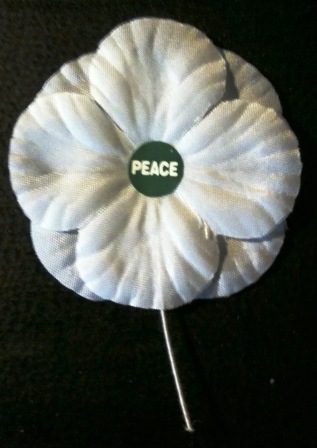
Red poppy, white poppy, green or black, I think we need to invest more thought and meaning into the symbol rather than being so symbolic with our meanings. I don't think a white poppy is disrespectful, I think it is an attempt to tell a more inclusive and historically relevant story about what is important to remember. We owe it to the war dead to find ways of solving problems without resorting to war. That would be the ultimate respect born out of remembrance.

Monday, January 28, 2008

Swaraj


I've been reading The Essential Gandhi (edited by Louis Fischer), and have emerged with both guilt and hope. Guilt because I recognize the truth about my complicity with consumer culture, but hope because of the strength a non-violent, self-sufficient, and power-resistant mindset affords.

I've been trying to think about how the concept of Swaraj (independence, beginning with self) applies to some of the power-structures I interact with: family/social, classroom/school/district, community/society. Also the identities of self, space, and landscapes (natural, human, and imagined). For example. what my classroom look like if I refused to exercise coercion in any form? What would our school's interaction with the district be like if we engaged in passive resistance to the policies and language which are ill-conceived for our context and collective goals? I often think that there are many fights which deserve my involvement, mostly educational crusades of one kind or another, but I'll admit that my motive is often not peace , love, and understanding so much as exposing bizarre thinking and thoughtless action in others with the hope that they'll leave me/us/them alone. Hmm... I'll read some more Gandhi before I pick this up again... the sleeping anarchist in me needs more time.